
Ruto’s Roadmap: Kenya’s New Blueprint to Replace Vision 2030
A Pivotal Moment for Kenya’s Long-Term Planning
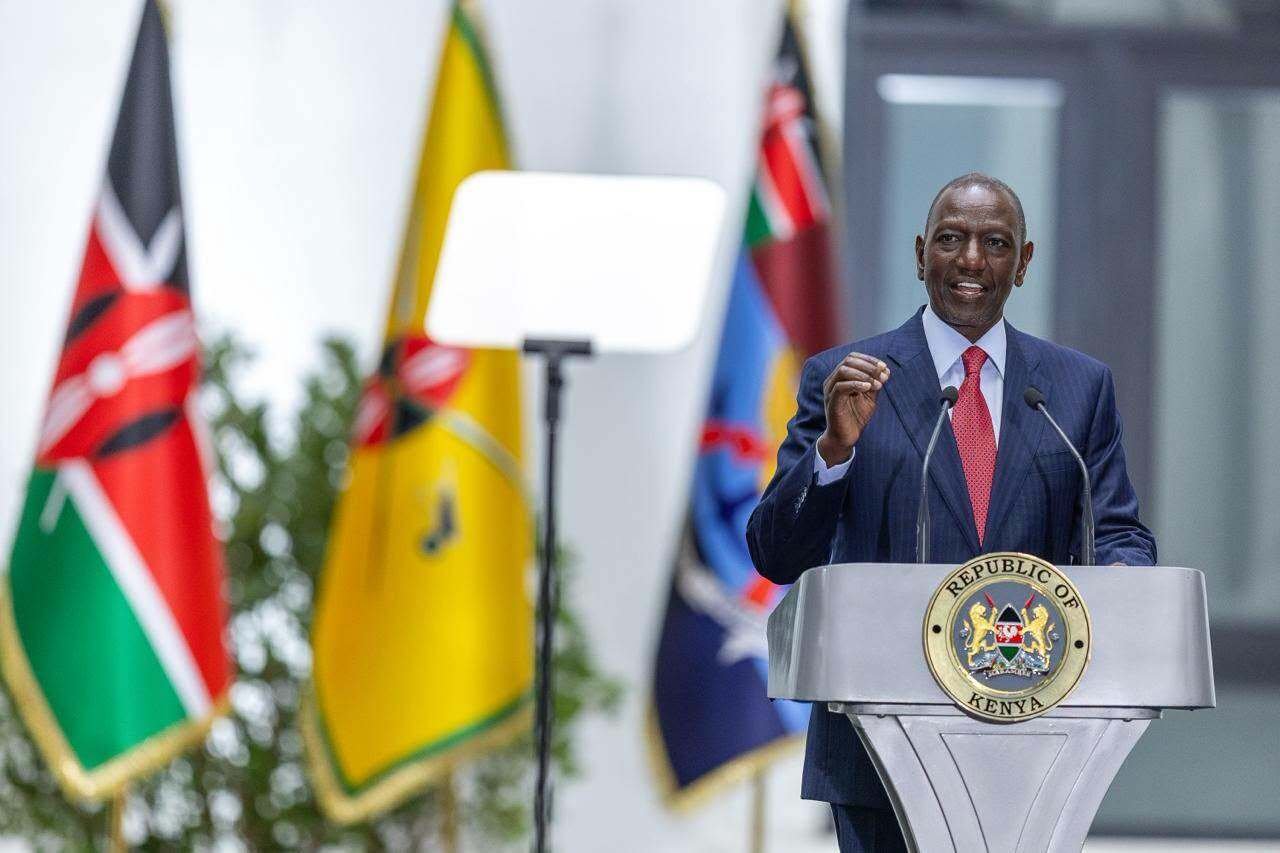
On the evening of Thursday, July 30, 2026, President William Ruto used a special national address from State House to launch what his government is calling the most significant public-participation exercise since Kenya’s 2010 Constitution was promulgated. The announcement set in motion a process to design a successor to Vision 2030 — the development blueprint that has anchored Kenyan economic policy since 2008.
Vision 2030 still has roughly four years left to run, but the government argues that a plan of this scale cannot be assembled overnight. Rather than wait for the current blueprint to expire, Ruto wants the groundwork for what comes next laid well in advance.
What’s Being Proposed: A “People-Driven National Development Charter”
The proposed successor has been given the name “People-Driven National Development Charter” and a deliberately different character from its predecessor. Where Vision 2030 was launched as a government development plan under former President Mwai Kibaki, Ruto wants the new charter anchored directly in the 2010 Constitution, so that it survives elections and outlasts any single administration.
The President framed the effort as more than a technical planning exercise. He argued that the new document should belong to Kenyans themselves rather than to the government of the day. He should reflect a national consensus that transcends political cycles rather than another manifesto-style plan tied to whoever is in power.
To get there, Ruto announced that a formal National Conversation on Kenya’s Future Beyond Vision 2030 will launch on August 12, 2026. The process is meant to draw in political parties, the private sector, workers’ organizations, faith communities, universities, professional bodies, innovators, civil society, the creative industries, county governments, and young people. Officials describe it as an effort to make sure no single administration can claim to define Kenya’s future on its own.
Notably, the groundwork had already begun before the July 30 address. A team of scholars, including Kisumu Governor Prof. Anyang’ Nyong’o, Japanese economist Prof. Hiroyuki Hino, and Kenyan academics Michael Chege, Karuti Kanyinga, and Peter Wanyande, had prepared a report on strategic guidelines for Kenya’s long-term transformation beyond Vision 2030. Ruto received that report at State House about a week before his national address, calling it a valuable contribution that raised important questions even if it didn’t answer all of them.
The Case for Moving On From Vision 2030
Vision 2030 set out to turn Kenya into a globally competitive, middle-income country by the end of the decade, built around economic, social, and political pillars. It has left a visible mark on the country’s infrastructure: the Standard Gauge Railway, an expanded road network, Konza Technopolis, growth in geothermal power, and the digitization of many government services all trace back to it.
But the government itself acknowledges the plan’s headline goal of upper-middle-income status by 2030 is now off track. In making his case for a successor, Ruto pointed to countries like South Korea, China, and Vietnam, which used sustained long-term planning to transform their economies, and suggested Kenya missed similar windows of opportunity in the past.
He also argued the country is now better placed to attempt a more ambitious plan, citing a stabilized currency, foreign exchange reserves rebuilt to more than $15 billion, lower inflation and borrowing costs, and what he described as a record $3.2 billion in foreign direct investment last year.
The Political Backdrop
The timing of the announcement is hard to separate from Kenya’s political calendar. With the general election scheduled for August 2027, Ruto is under pressure to show progress on the jobs and cost-of-living promises that carried him to power on a “bottom-up” economic platform. Recent polling cited by local media put his approval in the 24–32% range and found trust in his leadership deeply negative, with a large share of Kenyans saying the country is headed in the wrong direction. Kenya’s 2026 Economic Survey also showed that while employment has grown, most new jobs have landed in the informal sector, and youth unemployment remains high at around 15%.
Opposition figures have accused the administration of corruption and of falling short on campaign commitments, and Ruto has responded sharply and repeatedly in recent months, telling critics to produce their own manifesto rather than simply attacking his record. That back-and-forth has continued alongside the rollout of the new charter, with the President framing his development agenda, including the Affordable Housing Programme, as evidence his government has a clear plan, and dismissing rivals as offering rhetoric without substance.
Critics, for their part, may see the new charter as an attempt to shift the political conversation away from unmet promises and toward a forward-looking vision ahead of the 2027 vote. Supporters counter that starting the succession planning early and trying to build a document with constitutional standing rather than another administration-bound plan is precisely the kind of long-horizon thinking Kenya has lacked.
What Happens Next
The real test begins on August 12, when the National Conversation is formally launched. How broad and genuine the public participation turns out to be and whether the resulting charter can attract buy-in across Kenya’s fractured political landscape will likely determine whether the People-Driven National Development Charter becomes a durable national reference point, or another blueprint that rises and falls with the administration that wrote it.
