
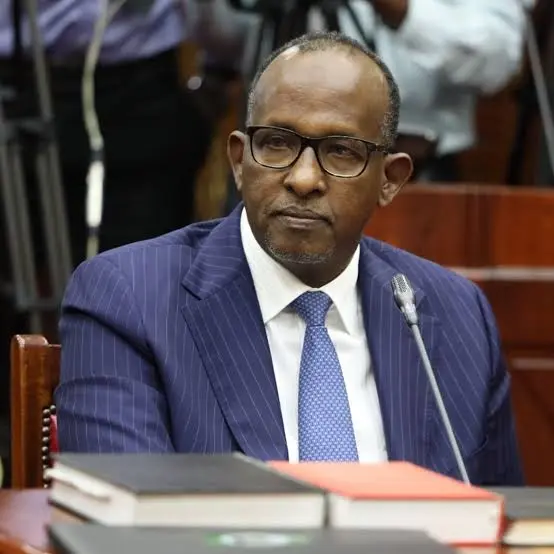
Petition Filed to Remove CS Duale from Government Over Alleged Ethnic Incitement
A petition has been filed at the High Court seeking the removal of Health Cabinet Secretary Aden Duale from office, over allegations of ethnic incitement and violation of leadership standards. The suit marks the most serious legal escalation yet in a controversy that has consumed Kenyan politics for over a week.
What the Petition Says
The petitioners anchor their case on comments Duale made on July 20, 2026, while addressing a gathering in Lafey Constituency, Mandera County. According to the court papers, his conduct and remarks contravened several provisions of the Constitution and the National Cohesion and Integration Act.
The petitioners argue that the Constitution requires state officers to exercise restraint in public communication, precisely to prevent politically instigated ethnic violence. As the petition puts it, the constitutional questions raised have to be read against Kenya’s own history of ethnic tension and violence around elections.
Their argument doesn’t stop at Duale’s individual conduct. They contend that Cabinet Secretaries, by virtue of holding public office, carry an obligation to promote national cohesion rather than deepen political or ethnic divisions — and that this obligation was breached.
On the free speech question, the petitioners are careful to draw a line: constitutional protection covers robust political debate, but not communication that undermines the equal dignity and security of communities. They cite Article 33(2) of the Constitution, which excludes incitement to violence and advocacy of hatred amounting to ethnic incitement from free speech protections. To underscore the stakes, they reference Rwanda’s 1994 genocide, arguing that courts should intervene early, before rhetoric escalates into something far more dangerous.
Ultimately, the petitioners want the court to find that Duale used ethnic slurs, dehumanizing metaphors, and language amounting to ethnic vilification and that this conduct is inconsistent with the constitutional requirements of leadership and integrity, rendering him “constitutionally unfit to continue serving as a Cabinet Secretary or in any State office.” They’ve also asked the court to compel him to comply with summons already issued by the National Cohesion and Integration Commission (NCIC), which he has so far resisted.
The Remarks That Started It All
The controversy traces back to Duale’s address in Lafey, where he appeared to suggest the Kikuyu community had adopted the attitude that “no one else should live well in Kenya.” He then invoked a Somali proverb about a hyena that has grown used to carrying something off and finds it hard to put down a line critics read as a direct, dehumanizing jab at the Kikuyu community, and one that quickly went viral.
Duale has firmly rejected that reading. He says he was widely misquoted, that his words were taken out of context to push a false narrative, and that the proverb was never meant to target or demean any community. He’s also accused his critics of “selective outrage,” pointing out that some of the loudest voices condemning him stayed quiet when, in his telling, inflammatory remarks targeting the Somali community were made in the past. In a pointed counter-jab widely read as aimed at former Deputy President Rigathi Gachagua, Duale argued that there’s no worse form of hate speech than telling someone they have “no share” in government and therefore won’t get job opportunities.
Cabinet Colleagues Turn on Him
What’s made this episode unusual is that the backlash hasn’t come only from the opposition or civil society; it’s split his own government. Lands Cabinet Secretary Alice Wahome became the first sitting Cabinet Secretary to publicly rebuke Duale, demanding he withdraw the remarks and issue an unequivocal apology, and dismissing his “others have said worse” defense as no justification at all. Kirinyaga Governor Anne Waiguru and Nyeri Governor Mutahi Kahiga also weighed in, with Waiguru calling the remarks “deeply regrettable” and warning against reducing the government’s political challenges to tribal prejudice. The matter even reached the Senate floor, where lawmakers suspended business to condemn the comments and call for restraint ahead of the 2027 election cycle.
Not everyone lined up against him, though. Nandi Senator Samson Cherargei accused the NCIC of double standards, arguing the commission should investigate Gachagua first over past remarks referring to the Nandi community as a “militia,” before turning its attention to Duale.
Where the NCIC Probe Stands
The National Cohesion and Integration Commission has opened a formal, independent investigation to determine whether Duale’s statements violated Article 33 of the Constitution and Sections 13 and 62 of the National Cohesion and Integration Act. Duale isn’t the only one under the microscope; the same probe covers Gachagua, Cabinet Secretary Geoffrey Ruku, Busia Governor Paul Otuoma, Mandera Deputy Governor Ali Maalim Mohamud, and several MPs and social media commentators. The NCIC’s chairperson has pushed back on public pressure to act purely on viral clips, insisting the commission needs formal complaints to move forward, and has separately rolled out broader measures including revived peace-monitoring platforms to manage rising political temperatures ahead of 2027.
What Happens Next
With the High Court petition now filed, Duale’s fate could ultimately be decided in two parallel arenas: the NCIC’s internal cohesion investigation, and the courts, where petitioners are asking a judge to declare him unfit for any State office altogether. Given how similar petitions against other Cabinet Secretaries, including Kipchumba Murkomen and Opiyo Wandayi, have played out this year, the coming weeks are likely to bring court mentions, further political statements, and continued pressure from both sides of the aisle.
For now, Duale remains defiant, refusing to apologize and standing by his account that his words were distorted. Whether the courts agree that a cultural proverb crossed into unconstitutional territory will be one of the more consequential rulings to watch as Kenya heads toward the 2027 General Election.