
Kenya Ebola Contact Tracing: What Identified Contacts and Quarantine Mean
Update — October 9, 2026: In remarks reported on October 8, Health Cabinet Secretary Aden Duale said 57 contacts had been identified and 66 people had been accounted for at the National Police Service Hospital as tracing continued. The Ministry of Health’s October 7 update had reported 10 contacts in quarantine. “Identified,” “accounted for” and “quarantined” describe different stages or counts; none is a count of people infected. Officials had confirmed one imported case, not a declared local outbreak.
The latest official figures, released on October 7, offer a clearer picture of the response after a Kenyan citizen who had travelled from the Democratic Republic of Congo died following treatment in Nairobi. The case has also prompted questions about how travellers with possible symptoms are screened, how contacts are identified and what members of the public should do.
What the contact counts mean
A contact is a person whom public health investigators identify as potentially having been exposed to someone with an infectious disease. Identification does not mean the person is infected. Health workers assess the type and timing of possible exposure and determine whether monitoring, testing or quarantine is appropriate.
On October 7, the ministry said 10 identified contacts were under quarantine and being monitored, while follow-up continued. The following morning, Duale said 66 people had been accounted for at the National Police Service Hospital and that the number was increasing. That does not mean all 66 were confirmed infected. The counts can change as investigators gather travel records and interview people who may have been exposed.
What officials have confirmed about the imported case
According to the Ministry of Health’s initial case statement, the patient had lived in the Democratic Republic of Congo and travelled overland to Kampala before boarding a flight to Nairobi on October 3. He was admitted to Nairobi Hospital, where clinicians isolated him and collected samples.
The National Virology Reference Laboratory and the Kenya Medical Research Institute independently confirmed Bundibugyo Ebola virus disease. The patient subsequently died. The ministry described this as an imported case, meaning the exposure occurred outside Kenya, rather than evidence of an established local chain of transmission.
How prepared is Kenya to respond?
Health Cabinet Secretary Aden Duale said more than 652,000 travellers had been screened and 267 samples tested through the national laboratory network. The ministry reported that 4,971 healthcare workers had received training in Ebola prevention and case management.
During an October 7 visit to Nairobi Hospital, officials reviewed isolation capacity at five designated facilities: Kenyatta National Hospital, Moi Teaching and Referral Hospital, National Police Service Hospital, Port Reitz Hospital and Nairobi Hospital. The ministry has also described broader plans to expand specialised isolation and treatment capacity.
These preparations do not eliminate the possibility of further imported cases, but they establish facilities and procedures for rapid detection, isolation and care. Continued reporting of laboratory results and contact-tracing outcomes is necessary to assess whether any onward transmission has occurred.
Symptoms and when to seek medical advice
The ministry listed fever, chills, fatigue, muscle pain, sore throat, painful swallowing and bleeding under the skin among the symptoms reported in the confirmed patient. Such symptoms can also occur with other illnesses; symptoms alone cannot confirm Ebola.
Anyone who becomes unwell after travel from an area reporting Ebola transmission, or after possible contact with a suspected case, should promptly contact a recognised healthcare facility and disclose the travel or exposure history. Where possible, call ahead so staff can advise on safe assessment and minimise unnecessary exposure.
The Ministry of Health has directed the public to its toll-free 719 information line for guidance. People should avoid sharing unverified claims about patients or contacts, and should not publish private identifying information.
Why the public should avoid panic
As of the ministry’s October 7 briefing, officials had confirmed one imported case and had not declared a domestic outbreak. That is a time-specific status, not a guarantee that no further cases will be detected. Public health monitoring is designed to identify changes quickly.
The most useful steps for the public are to follow official updates, practise routine hygiene, seek care early when symptoms and relevant exposure history are present, and cooperate with contact-tracing teams if approached.
Questions still awaiting official answers
Authorities have not yet published a complete public account of all potential exposures during the patient’s journey, nor the final outcome of monitoring for every identified contact. Updated figures should be interpreted alongside their reporting date because contact lists can grow as investigations continue.
Daily Report KE will publish a separate report if the ministry confirms a new case, a material change in contact-tracing results or a new public-health directive. Readers can also consult our earlier coverage of the first confirmed case.
Official sources
- Ministry of Health: October 7 contact-tracing and preparedness update
- Citizen Digital: October 8 remarks by the Health Cabinet Secretary on contacts accounted for
- Ministry of Health: public guidance and preparedness
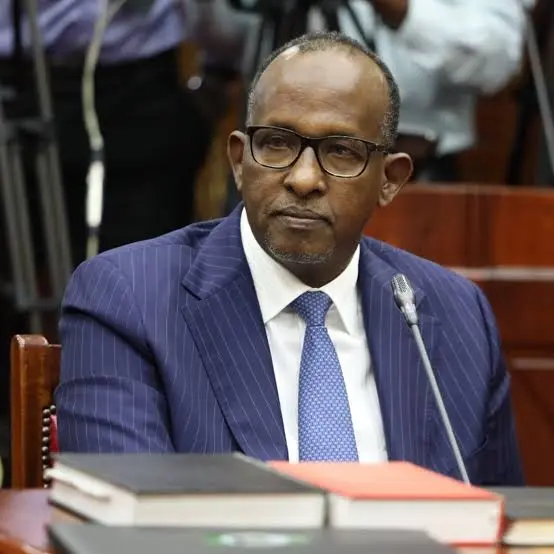
Featured photograph: Archive image of Health Cabinet Secretary Aden Duale; not a photograph of the patient, contacts or quarantine facilities.
