
Kenya’s First Ebola Patient Dies at Nairobi Hospital as Contact Tracing Intensifies
Update — October 9, 2026: The initial October 6 briefing reported 28 contacts identified. In remarks on October 8, Health Cabinet Secretary Aden Duale said 57 contacts had been identified and 66 people had been accounted for at the National Police Service Hospital as tracing continued. These are separate response counts reported on different dates. Read our contact-tracing update.
Kenya’s first confirmed Ebola patient died while receiving treatment at Nairobi Hospital, Health Cabinet Secretary Aden Duale announced on Tuesday, October 6, as authorities intensified contact tracing and prepared a safe and dignified burial.
The patient was a Kenyan citizen who had lived and worked in the Democratic Republic of Congo (DRC) for the past seven years. According to the Ministry of Health briefing, he had been unwell for about a month and had received treatment at several health facilities in the DRC before beginning his journey back to Kenya.
Patient travelled from DRC through Uganda
Duale said the man travelled by road from the DRC to Kampala, Uganda, before boarding Jambojet flight 8523 to Nairobi. The flight arrived at Jomo Kenyatta International Airport at approximately 1:10 p.m. on Saturday, October 3.
The patient went through routine Port Health screening and immigration procedures at JKIA. A relative and a friend then transported him directly from the airport to Nairobi Hospital.
Patient isolated after arriving at Nairobi Hospital
At Nairobi Hospital, the patient was immediately isolated in a separate room in the Accident and Emergency department before being transferred to the hospital’s East Wing Isolation Facility.
According to Duale, the patient presented with fever, chills, intense fatigue, weakness, muscle pain, painful swallowing, a sore throat and bleeding under the skin at injection sites.
Because of the symptoms and his recent travel history from the DRC, clinicians suspected a viral haemorrhagic fever and collected samples for laboratory testing.
The samples tested positive for Bundibugyo Ebola virus disease at the National Virology Reference Laboratory and the Kenya Medical Research Institute laboratory.
Patient died Monday night
The Health CS said the patient received supportive treatment but died at about 11:30 p.m. on Monday, October 5.
The government said arrangements were being made for a safe and dignified burial later on Tuesday in accordance with Ebola public-health protocols. Such procedures are intended to protect family members, health workers and burial teams from exposure while allowing the deceased to be treated with dignity.
Initial contacts reported on October 6
At the first briefing, the Ministry of Health reported 28 contacts associated with the patient, including family members and healthcare workers. Officials were also tracing 23 passengers and four crew members aboard his Kampala–Nairobi flight. The contact list later grew as investigators continued their work; the figures above are dated updates, not a final total.
Contact tracing is particularly important in an Ebola response because symptoms can take time to appear. People identified as contacts are monitored so that anyone who develops symptoms can be isolated, tested and treated promptly.
Kenya had been preparing for regional Ebola threat
Kenya has maintained heightened Ebola surveillance since the regional outbreak began in May 2026. The Ministry says 652,584 travellers have been screened and 267 samples tested through the country’s laboratory network. The Nairobi case is the first sample confirmed positive.
The government has also trained 4,971 healthcare workers at national and county levels on Ebola prevention and management.
Earlier in June, the Ministry activated the National Ebola Incident Management System, strengthened screening at airports and land borders and designated isolation and treatment facilities as part of preparations for a possible imported case.
Health ministry issues public guidance
The Ministry of Health has urged the public to remain calm while maintaining basic infection-prevention precautions. People should wash their hands regularly with soap and water or use an alcohol-based hand rub, avoid direct contact with the bodily fluids of anyone suspected of having Ebola, and seek medical attention promptly if they become unwell after possible exposure or travel from an affected area.
Members of the public should rely on official Ministry of Health information rather than unverified social-media claims. Health workers have also been advised to maintain strict infection-prevention and control measures when handling suspected cases.
The Ministry has notified the World Health Organization under the International Health Regulations and says surveillance, laboratory testing and rapid-response systems remain active.
Official Ebola preparedness information is available from the Kenya Ministry of Health and the World Health Organization.
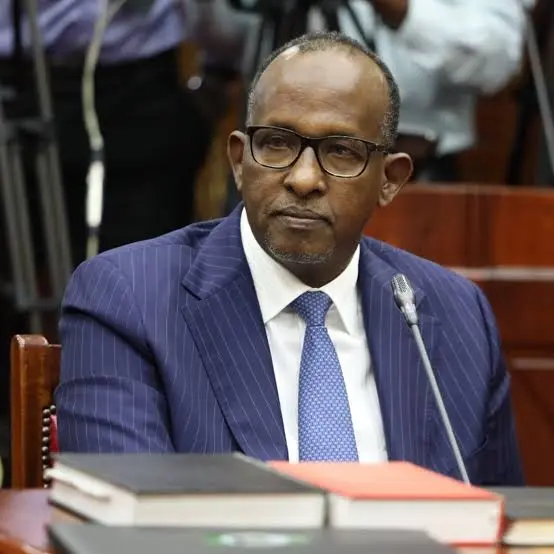
Featured image: Health Cabinet Secretary Aden Duale. Archive photograph used to identify the government official leading the Ministry of Health response; it does not depict the Ebola patient.
