
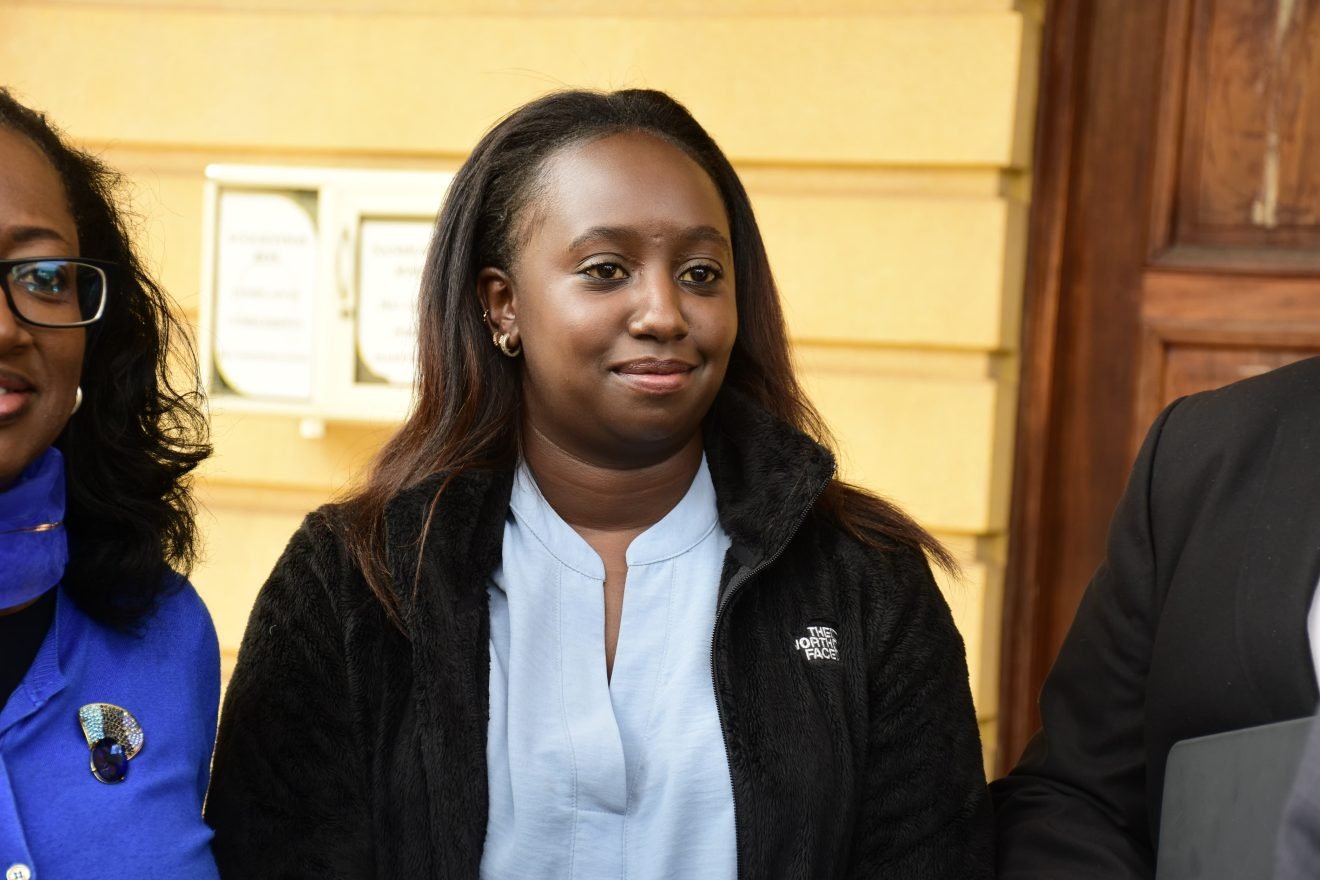
Maxine Wahome Acquitted of Asad Khan Murder — Full Court Ruling Explained
On Tuesday, July 28, 2026, a Nairobi High Court judge brought an end to one of Kenya’s most closely watched criminal trials, acquitting rally driver Maxine Wahome of murdering her former boyfriend and fellow motorsport competitor, Asad Khan. The ruling closed out proceedings that had stretched on for nearly four years and had put Wahome’s promising rally career on hold at what should have been its peak.
The Case Against Her
Wahome had been charged with killing Khan at Preston Apartments along Oloitoktok Road in Nairobi on December 12, 2022. Prosecutors alleged that Khan died from injuries sustained during a domestic altercation between the two, and built their case largely on circumstantial evidence, including the fact that only Wahome and Khan were present in the house at the time he was fatally injured.
Over the course of the trial, the prosecution called 29 witnesses in an effort to prove that Wahome inflicted the injuries that killed Khan. Investigators also pointed to WhatsApp messages exchanged between the couple, the nature of their relationship, and the fact that Wahome did not visit Khan in hospital or attend his funeral, arguing this behavior was suspicious.
Why the Judge Said the Case Fell Apart
Delivering her ruling, Justice Lilian Mutende found that despite the volume of testimony, none of it directly linked Wahome to the injuries that killed Khan. She noted that even the investigating officer could not say with certainty that Wahome had caused his death.
Central to the ruling was the judge’s rejection of the prosecution’s core logic: that because only two people were in the house, and one of them died, the survivor must be responsible. Justice Mutende held that this kind of inference cannot substitute for actual evidence; the absence of an alternative explanation does not, by itself, establish guilt.
She also addressed the prosecution’s argument that Wahome’s absence from the hospital and funeral suggested a guilty conscience. The judge pushed back on that framing, observing that Wahome’s reluctance could just as easily reflect fear or discomfort, given that she had been treated as a suspect from the very outset of the investigation.
Weighing all of this, Justice Mutende concluded that the prosecution had failed to establish a prima facie case — the legal threshold required to even compel a defendant to mount a defense. Invoking Section 206(1) of the Criminal Procedure Code, she discharged Wahome without requiring her to testify or call any witnesses of her own.
In her final ruling, Justice Mutende held that, taken as a whole, the prosecution’s evidence simply did not amount to a case Wahome needed to answer, and she ordered the acquittal accordingly.
The Defense’s Position
Throughout the trial, Wahome maintained her innocence, and her legal team, led by Senior Counsel Philip Murgor, argued that Khan’s death was the result of an accident, not an assault. Murgor has since described the years-long prosecution as a miscarriage of justice, saying the case unfairly upended Wahome’s life and career for nearly four years before ending in acquittal.
What This Means Going Forward
With the acquittal, Wahome walks away with no criminal liability in Khan’s death, and the case that had frozen her rally career is now formally closed. For a driver once considered among the country’s most promising young talents, the ruling opens the door to a potential return to competition, though after years spent in courtrooms rather than on rally stages, what that comeback looks like remains to be seen.
