
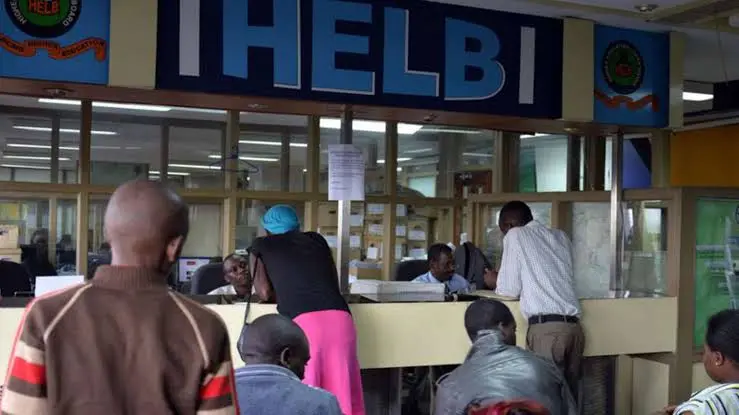
HELB Dissolution: New Bill Proposes Merging HELB, Universities Fund & TVET Fund Into TEFA
Kenya’s higher education financing landscape is on the verge of its most dramatic shake-up in years. A new piece of legislation before Parliament, the Tertiary Placement and Funding Bill, 2026, proposes scrapping the Higher Education Loans Board (HELB) altogether and folding its functions along with those of the Universities Fund and the TVET Fund into a single new body: the Tertiary Education Funding Authority (TEFA).
For an institution that has been the backbone of student financing in Kenya for decades, the proposal marks a potential end of an era. If lawmakers pass the bill and it is signed into law, HELB as Kenyans have known it would cease to exist, replaced by one centralized authority responsible for placing and funding students across universities, colleges, and technical and vocational institutions.
What the Bill Proposes
Under the current system, responsibility for financing tertiary education is split across three separate agencies. HELB issues and recovers student loans, the Universities Fund channels government capitation to universities, and the TVET Fund Board manages support for technical and vocational training institutions. Critics have long argued that this fragmented structure creates duplication, inefficiency, and confusion for students trying to navigate multiple funding channels at once.
The new bill seeks to end that fragmentation by consolidating all three mandates under TEFA. The authority would take over HELB’s core functions of disbursing loans and recovering repayments from graduates once they join the workforce, while also absorbing the budgetary and disbursement roles currently held by the Universities Fund and TVET Fund Board.
Beyond the institutional merger, the bill introduces a more far-reaching policy shift: doing away with the income-based, means-tested funding model in place since 2023. That model classified students into bands based on household income and academic performance, determining how much a student would receive as a scholarship versus a loan. In its place, the bill proposes a universal funding framework in which every student who qualifies for placement in a public university, college, or TVET institution receives full government support, regardless of their family’s financial standing.
The Political Backdrop
The bill’s introduction follows closely on the heels of an announcement by President William Ruto, who told an audience at State House that from September 2026, every student placed in a public university or college would receive full government funding for their education, covering tuition, accommodation, and living expenses. Under this arrangement, graduates would repay the funded portion once employed, with the repayments feeding a revolving fund intended to support future cohorts of students.
The president has been openly critical of the differentiated funding model his own government introduced in 2023, arguing that it undermined university finances rather than strengthening them. He noted that although the model promised universities up to 80 percent of required funding in some bands, actual disbursements often fell closer to 40 percent, pushing several institutions toward financial distress.
That funding shortfall has been playing out in real terms this year. Earlier in 2026, the Higher Education Principal Secretary told a parliamentary committee that HELB faced a funding deficit of roughly Sh32.9 billion for the current financial year, leaving hundreds of thousands of eligible students without full support. The gap illustrated, in stark terms, the strain the existing model was placing on both the board and the students who depend on it and added urgency to the government’s push for reform.
What Changes for Students and Families
If the bill becomes law, the practical effect for students would be a shift away from applying separately to HELB for loans and navigating income-band calculations. Instead, placement into a public institution would automatically trigger funding through TEFA, removing the means test that has determined funding levels in recent years.
Government officials argue that a single authority will simplify what has been a confusing and often slow process, reduce administrative duplication between agencies, and create a more predictable, sustainable financing model. The bill also places emphasis on strengthening loan recovery from graduates, which the government says is essential to keeping the funding pool replenished for future students.
For prospective and current university, college, and TVET students and their families, the reforms could mean no longer worrying about qualifying for a particular funding band, but questions remain about how quickly the new system can be implemented and whether a merged authority can manage the same funding shortfalls that have plagued the current arrangement.
What Happens Next
The Tertiary Placement and Funding Bill, 2026 is currently before Parliament and has not yet been passed. Lawmakers still need to debate, amend where necessary, and vote on the legislation before it can be signed into law. The government has indicated it wants the bill passed quickly enough to support a rollout of the new funding framework beginning in September 2026, though the legislative timeline ultimately rests with Parliament.
Until the bill clears both the National Assembly and the Senate and receives presidential assent, HELB continues to operate under its existing mandate. Students and parents are advised to keep following official communication from HELB, the Ministry of Education, and Parliament for updates on the bill’s progress and what it will mean for ongoing and upcoming loan applications.
