
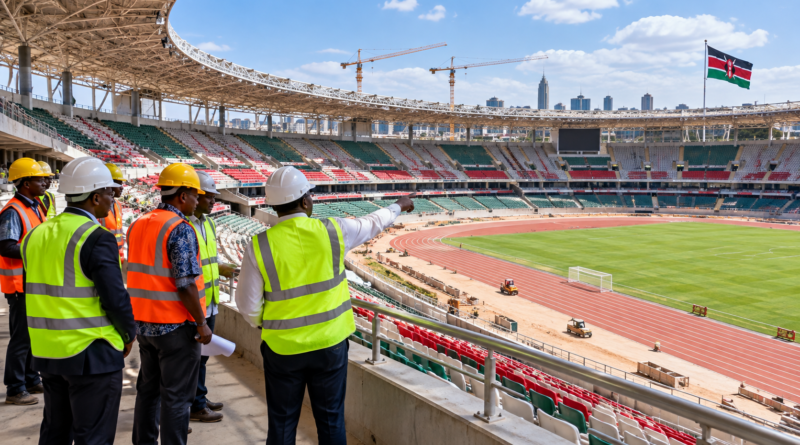
Talanta Stadium Reaches About 94% Completion Ahead of AFCON 2027
Construction of the Raila Amolo Odinga International Stadium, commonly known as Talanta Stadium, has reached about 94 per cent completion as Kenya steps up preparations for the 2027 Africa Cup of Nations.
The progress figure was presented during an inspection by the Senate Committee on Labour and Social Welfare, which visited the project to assess construction, worker welfare, accessibility and the stadium’s readiness for international competition.
Although 94 per cent suggests the project is close to completion, officials acknowledged that important technical, accessibility and operational work still remains before the stadium can be considered tournament-ready.
What the 94% completion figure means
Large stadium projects are not complete simply when the main concrete structure, roof and seating are visible. The final phase normally includes installation, testing and commissioning of electrical systems, floodlights, turnstiles, security systems, communications infrastructure, pitch systems, changing rooms, hospitality areas and emergency facilities.
Those final tasks can determine whether a stadium meets international match requirements even if most of the construction work is already physically complete.
A 60,000-seat venue for major international events
Parliament’s update describes the facility as a 60,000-seater stadium. Its scale would make it one of Kenya’s largest sports venues and an important part of the country’s preparations to co-host AFCON 2027 with Uganda and Tanzania.
Beyond football, the completed stadium could also host athletics, national celebrations, concerts and other large events, depending on the final operational model.
Why accessibility is still an important issue
The Senate committee highlighted accessibility among the areas requiring attention. Modern stadium standards require facilities that can be safely used by spectators with disabilities, including accessible seating, toilets, entrances, lifts or ramps and clearly designed evacuation routes.
Accessibility is not a cosmetic finishing item. It affects whether the venue can safely accommodate all spectators and whether it meets national and international standards.
Technical systems must be tested before opening
A stadium can look finished while still requiring months of commissioning. Engineers must test power systems, backup generators, fire alarms, public-address equipment, CCTV, ticketing systems, drainage and emergency exits.
The playing surface also has to meet competition standards, while dressing rooms, media facilities, medical rooms, anti-doping areas and referee spaces must be ready for inspection.
AFCON 2027 raises the stakes
Kenya is preparing to co-host the 2027 Africa Cup of Nations alongside Uganda and Tanzania. Tournament preparation goes beyond building stadiums. Host cities also need transport, training grounds, hotels, security plans, broadcast facilities and reliable utilities.
For Nairobi, Talanta Stadium is expected to become one of the flagship venues in that preparation programme.
The project has attracted parliamentary scrutiny
Talanta Stadium has previously been examined by Senate committees over its cost, procurement arrangements and ownership documentation. In May 2026, Parliament reported that the project was valued at about Sh45.8 billion while senators questioned the Sports Ministry about expenditure and procurement.
Sports Cabinet Secretary Salim Mvurya defended the project during that earlier scrutiny and said the stadium would be completed in time for AFCON preparations.
Why the remaining six per cent may still take significant work
Completion percentages on large infrastructure projects can be misleading if read too literally. The final portion can include specialised work that must be carried out by different contractors, tested repeatedly and certified before handover.
Items such as fire systems, accessibility works, lifts, data networks, broadcast infrastructure and crowd-control systems may represent a relatively small percentage of total construction cost or volume but are essential for safe operation.
What tournament organisers will look for
Before hosting major international matches, organisers and football authorities typically inspect areas such as:
- Pitch quality and drainage.
- Player and referee facilities.
- Floodlighting.
- Spectator seating and sight lines.
- Media and broadcast facilities.
- Security and crowd-control systems.
- Medical and emergency-response areas.
- Accessibility for persons with disabilities.
- Transport and spectator entry arrangements.
Worker welfare is also under review
The Senate Labour Committee’s involvement means the inspection was not only about the physical stadium. Parliamentary oversight also considers labour conditions, safety and the treatment of workers involved in the project.
Construction projects of this scale employ large numbers of workers and contractors, making occupational safety and compliance an important part of the final delivery process.
What happens before the first major match?
Once construction is substantially complete, the stadium is expected to move through testing, inspections and certification. Authorities may also stage smaller events or operational rehearsals before allowing a capacity international match.
Those rehearsals can reveal problems with entry gates, transport, security screening, toilets, public-address systems or crowd movement before a major tournament.
Why the stadium matters beyond AFCON
AFCON provides the immediate deadline, but the long-term value of Talanta Stadium will depend on how often it is used, maintained and commercially managed after the tournament.
Large sports venues require continuous spending on the pitch, utilities, cleaning, security and repairs. A successful post-AFCON plan would therefore need a schedule of sporting and commercial events capable of keeping the venue active.
What to watch next
The main milestones now include completion of outstanding technical works, accessibility improvements, commissioning of systems, final certification and readiness inspections.
Progress should be judged not only by the construction percentage but also by whether the stadium can safely and reliably host tens of thousands of spectators.
Sources
- Parliament of Kenya: Senate Labour Committee assesses Talanta Stadium as AFCON deadline nears
- Parliament of Kenya: Senate scrutiny of the Talanta Stadium project
Daily Report KE will continue tracking construction milestones and official readiness assessments as Kenya prepares for AFCON 2027.
