
Busia Schools Urged to Restore Broken Handwashing Stations as Health Officials Warn of Hygiene Gaps
School administrators in Teso North, Busia County, have been urged to repair handwashing facilities that have fallen into disuse, amid concerns that hygiene practices introduced during the COVID-19 pandemic are weakening.
Speaking during Global Handwashing Day activities at Malaba Dispensary, Teso North public health officer Dennis Wekesa said about 100 schools in the area had handwashing facilities, many of which were no longer functioning, according to a Kenya News Agency report published October 16, 2026.
Why a handwashing station matters beyond the pandemic
Hand hygiene became a visible part of everyday school life during the coronavirus pandemic. But a station without functioning taps, accessible water or soap offers little protection. Officials are calling for practical maintenance rather than awareness campaigns alone.
Regular handwashing with soap helps reduce the spread of germs associated with diarrhoeal and respiratory illnesses. This matters in schools because shared classrooms, toilets, sports equipment and eating areas create repeated opportunities for contamination.
What health officials are asking schools to do
Wekesa urged school leaders to restore facilities and make clean running water and soap available to learners. He also encouraged handwashing before preparing or eating food, after using toilets and at other important moments.
Busia’s water, sanitation and hygiene coordinator, Priscilla Juma, emphasised the need to provide the actual resources needed for handwashing. Instructions and posters are useful, but they cannot replace water, soap and maintained infrastructure.
How families and school managers can respond
School management teams can begin by checking each existing station for safe water supply, working taps, drainage and soap availability. A designated staff member or hygiene club can help record defects and arrange repairs. Where water supply is unreliable, school leaders should identify safe, practical alternatives in line with public health guidance.
Parents and pupils can reinforce the same routines at home, especially before meals and after using the toilet. Schools should also ensure younger children are shown how to wash their hands properly rather than simply told to do so.
A community-wide health issue
The appeal extended beyond schools. Health officials called on churches and healthcare facilities to maintain suitable hand hygiene arrangements. Crowded shared environments can make access to washing points especially important.
The wider lesson is that maintaining existing facilities is often as crucial as installing new ones. For Teso North schools, the practical measure of progress will be whether previously unusable stations are repaired and reliably supplied.
Source: Kenya News Agency, October 16, 2026.
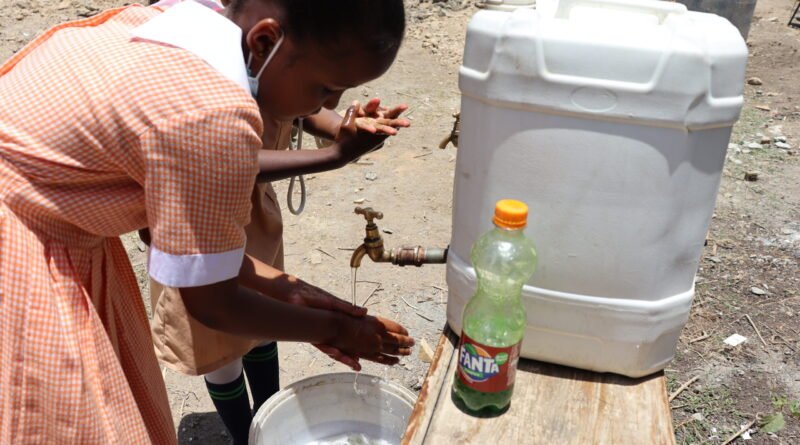
Image: Schoolchildren washing hands in Kenya in 2022, an archive photograph by safaritravelplus via Wikimedia Commons (CC0 1.0). It does not show the Teso North event.
