
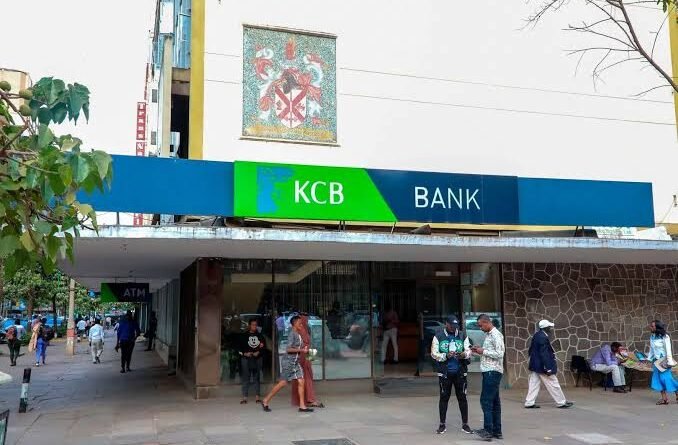
KCB vs Foxcapital: Inside Kenya’s Sh146 Billion Banking Fraud Dispute
A dispute over one of the largest sums ever contested in a Kenyan courtroom has taken a new turn. KCB Bank Kenya has formally asked the Directorate of Criminal Investigations (DCI) to examine documents submitted in a Sh146.3 billion ($1.1 billion-plus) High Court case brought against it by Foxcapital Investment Limited. The bank says the paperwork underpinning the claim may be fabricated an allegation that, if proven, would turn a civil banking dispute into a full-blown criminal fraud investigation.
Here is what has happened so far, based on court filings and reporting from multiple Kenyan outlets.
How the Dispute Started
Foxcapital Investment Limited told the Commercial Division of the High Court that it had entered into a financing arrangement with a Switzerland-based firm, Bay Bionics Limited (formerly registered as BB Biotech AG), on October 21, 2025. Under that arrangement, Bay Bionics was to provide roughly €978,675,835 about Sh146.3 billion at prevailing exchange rates to fund a slate of Kenyan development projects, including infrastructure bonds, public-private partnerships and renewable energy ventures.
According to Foxcapital’s lawyer, Philip Nyachoti, the funds were transmitted to KCB on November 28, 2025, via a SWIFT MT103 transfer routed through UBS Switzerland AG, for credit to a Foxcapital account at KCB’s Sarit Centre branch in Nairobi. Foxcapital says it later obtained documentation appearing to confirm that the transfer had been successfully processed and settled on the UBS side, yet the money was never reflected in its KCB account.
KCB’s Explanation and the Contradictions Foxcapital Alleges
Foxcapital’s court papers describe a confusing back-and-forth with the bank over several months. The firm claims that on April 17, 2026, KCB’s finance and compliance team logged what it internally classified as a “P1” (critical) incident, attributing the delay to a system routing fault during scheduled maintenance that supposedly caused the transaction to skip a stage of KCB’s standard inward-payment processing. Foxcapital says a compliance manager later indicated there were no red flags on its side, and that KCB’s IT security team reaffirmed in July 2026 that the funds existed but were stuck due to a technical defect.
However, Foxcapital alleges that shortly afterward, a different KCB department told the company the exact opposite: that no such SWIFT message had ever been received and that the bank held no record of the transaction at all. Frustrated by what it called contradictory conduct, Bay Bionics reportedly sent a formal letter to KCB’s managing director in mid-July 2026 demanding clarity.
Unable to get the funds released, Foxcapital sued in early August 2026, and the High Court through Justice Rhoda Rutto issued interim orders barring KCB from transferring, trading with, or otherwise dealing with the disputed amount pending resolution of the case. Those preservation orders have since been extended, with the matter listed for further hearing in September 2026.
KCB Pushes Back: “The Documents Are Not Genuine”
KCB has firmly disputed Foxcapital’s version of events. In a formal complaint to the DCI’s Banking Fraud Investigations Unit signed off by Group CEO Paul Russo the bank challenges the authenticity of the SWIFT messages, the April incident report, and subsequent internal reviews that Foxcapital relied on in court, arguing that some documents attributed to UBS Switzerland AG and to KCB’s own staff were never actually produced by them.
KCB says it wrote directly to UBS on August 13, 2026, asking the Swiss bank to confirm whether it had originated the payment instructions and supporting paperwork. According to KCB’s complaint, UBS responded that the documents in question were not issued by UBS Switzerland AG and were therefore not genuine.
The bank says this response, combined with the absence of any matching transaction in its own systems and sworn statements from its officers, gives it reasonable grounds to believe falsified records are being used to support a claim worth close to Sh147 billion. KCB has asked the DCI to establish who prepared, circulated, and filed the disputed documents.
What Happens Next
The case is far from settled. The High Court’s asset-preservation orders remain in force, meaning the disputed sum still sitting in a “held” status under an internal KCB incident number cannot be moved by either party until the court rules otherwise. A further hearing is scheduled for mid-September 2026, when the judge is expected to weigh KCB’s request to lift the preservation orders against Foxcapital’s push to have the funds released.
Meanwhile, the DCI complaint opens a parallel track. If investigators substantiate KCB’s claim that the supporting documents were forged, it could shift the matter from a contractual dispute over an alleged bank error into a criminal case involving document fraud potentially implicating whoever drafted or submitted the disputed paperwork. Conversely, if UBS or forensic document analysis were to support Foxcapital’s account, questions would instead turn back to KCB’s own systems and record-keeping.
Why This Case Matters
Cases involving alleged nine-figure and ten-figure “phantom” bank transfers are not unique to Kenya similar disputes over unverified inward remittances have surfaced in other jurisdictions, often turning on the authenticity of SWIFT documentation, which can be difficult for ordinary courts to verify without direct bank-to-bank confirmation. What makes the KCB-Foxcapital matter notable is the sheer scale of the sum in dispute, the involvement of a global institution like UBS, and the fact that it comes weeks after three Kenyan bank CEOs including KCB’s own chief executive were separately charged over unrelated allegations of failing to report suspicious transactions. Together, these cases have put a spotlight on how Kenyan banks handle large, unverified cross-border transfers and the compliance checks meant to catch irregularities before they reach a courtroom.
For now, no findings of fraud have been made against any party. Foxcapital’s claim and KCB’s fraud complaint are both, at this stage, allegations that will be tested through the ongoing court process and any resulting DCI investigation.
This article is based on publicly available court filings and news reporting current as of August 26, 2026. It does not allege wrongdoing by any named individual or entity beyond what has been reported, and all claims described remain unproven pending the outcome of the High Court case and any investigation. This is a developing story and details may change as the case progresses.
