
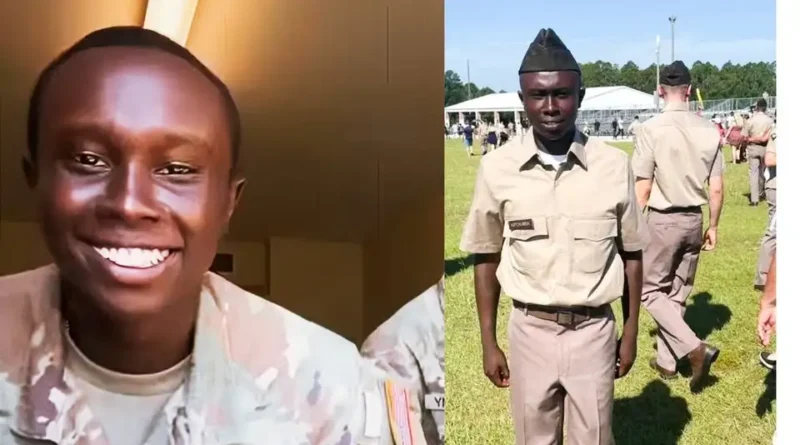
US Army Welcomes Kenyan Immigrant: Newton Kipchumba’s Journey From Nursing to the Military
Every year, thousands of young Kenyans board flights to the United States chasing the same dream: a better job, an advanced degree, a shot at the “American life.” Most of them arrive with a plan already mapped out, usually one that runs through nursing school, hospital shifts, and a steady healthcare paycheck. Newton Kipchumba’s story started exactly that way. It just didn’t end that way.
Three years after landing in the US and settling into nursing and care work, Kipchumba is now a soldier in the United States Army, a decision he says came almost overnight, and one that has turned him into an unlikely source of curiosity for Kenyans watching from home and abroad.
A Familiar Start: Healthcare, School, and Burnout
Like many Kenyan immigrants who arrive on family or employment-based pathways, Kipchumba didn’t waste time getting to work. He took up nursing and care-work roles, the kind of entry-level healthcare jobs that have become almost a rite of passage for the Kenyan diaspora in America demanding, often thankless, but steady and in high demand.
At the same time, he was pursuing further studies, hoping to build on his healthcare career the way so many before him have. But anyone who has tried to work full-time in caregiving while carrying a course load knows how quickly that balance can collapse. Long shifts, emotionally taxing patient care, and the discipline required for coursework don’t always coexist peacefully, and for Kipchumba, something eventually had to give.
He has been candid about the fact that the job itself didn’t fulfill him the way he’d hoped. Rather than grinding through a career he wasn’t passionate about just to “make it work,” he chose to stop and rethink the entire plan.
“I Woke Up One Day and Decided to Join the Army”
That’s how Kipchumba describes the moment the idea took hold, not as the product of years of deliberation, but as a sudden, clear decision. He says he had briefly considered other branches of the military, but ruled out the Marines for a refreshingly honest reason: he couldn’t swim. The Army, by contrast, felt like the right fit.
What’s notable is what he did next. He didn’t sit on the idea. He started the enlistment process almost immediately, treating the decision itself as the hard part; once that was settled, he says, everything else became more manageable.
What It Actually Took: Documents, Medical Exams, and Background Checks
Kipchumba’s enlistment journey offers a real-world look at what the process demands of a green card holder, rather than a US-born citizen. He had to provide a stack of documentation, including:
- His green card (Permanent Resident Card)
- His Kenyan passport
- A US driving licence
- His Social Security number
From there came the parts of enlistment that trip up a lot of applicants: medical examinations to confirm physical fitness for service, and background checks to clear him for enlistment as a lawful permanent resident. None of this is unique to immigrants; U.S. citizens go through similar screening, but for someone still relatively new to the country, gathering the right paperwork and passing every checkpoint adds an extra layer of pressure.
He came through it. And once he did, the “daunting” process he’d anticipated turned out to be, in his own words, far less intimidating than he’d expected, mostly because he’d already made peace with the decision before he started.
Going Viral for the “Wrong” Reasons
Kipchumba didn’t set out to become an online talking point. He simply started sharing videos of himself in camouflage and military gear, the way any recruit proud of a major life change might. But the internet had questions a lot of them. How does someone who moved to the US only a few years ago end up in the Army? Isn’t that supposed to be complicated, or off-limits to immigrants entirely?
His answer, patiently repeated across comment sections and follow-up videos, boiled down to one fact many people don’t realize: you don’t need to be a US citizen to serve. You need to be a lawful permanent resident. That single clarification reframed the conversation, turning his page into an accidental explainer for a process most people, Kenyan and American alike, don’t fully understand.
Why This Story Resonates With the Kenyan Diaspora
Kipchumba’s pivot reflects something bigger than one man’s career change. Kenyans abroad have built a strong reputation in American healthcare nursing associations; hospital wards, and home-care agencies across the US are full of Kenyan names. But his story is a reminder that the diaspora isn’t a monolith chasing one script. Some Kenyans in the US military have stayed in medicine, rising through the ranks as Army nurses and eventually into senior clinical roles. Others, like Kipchumba, are stepping into entirely different lanes: logistics, combat support, engineering, intelligence, proving that “making it” in America doesn’t have to mean picking the most obvious path and sticking to it forever.
For young Kenyans watching his videos and wondering if a similar move is even possible, here’s the honest breakdown.
How a Kenyan Immigrant Can Actually Join the US Military
If you’re a Kenyan (or any immigrant) living in the US and wondering whether Kipchumba’s path is open to you, here’s what the process generally requires:
1. Hold valid lawful permanent resident status. This is the baseline. You need an unexpired Green Card (Form I-551). Temporary visas, student visas, work visas, and visitor visas do not qualify you to enlist, and undocumented immigrants cannot join. Programs like MAVNI, which once allowed certain visa holders with specialized skills to enlist, have been suspended for years with no indication of returning.
2. Meet the standard eligibility requirements. These apply to citizens and green card holders alike:
- Be within the branch’s age limits (the Army raised its maximum active-duty enlistment age to 42, effective April 2026, up from the previous cap of 35)
- Hold a high school diploma or GED
- Pass the Armed Services Vocational Aptitude Battery (ASVAB), which helps determine which military jobs you qualify for
- Meet physical fitness and medical standards
- Pass a background check and meet moral character standards
- Speak, read, and write English fluently
3. Gather your documentation. Expect to provide your Green Card, passport, Social Security number, and a valid driver’s licence, along with your Alien Registration Number (A-Number) from USCIS.
4. Talk to a recruiter. This is typically the real starting point: a recruiter walks you through eligibility, helps schedule your ASVAB, and explains which military occupational specialties (MOS) you might qualify for based on your background and test scores.
5. Understand the limits. As a green card holder rather than a citizen, you generally cannot become a commissioned officer, and you may be restricted from roles requiring a security clearance. Most enlisted positions, however, remain open to you.
6. Know the citizenship upside. This is one of the most powerful, and least understood, benefits of military service for immigrants. Under the Immigration and Nationality Act, a green card holder who serves honorably can apply for naturalization on an accelerated timeline in some cases after as little as one year of service in peacetime, or even faster during officially designated periods of hostility. That’s a dramatic shortcut compared to the standard five-year residency requirement most green card holders face.
A Broader Lesson From One Soldier’s Decision
Kipchumba’s story isn’t really about the Army, or nursing, or even immigration policy on its own. It’s about what happens when someone admits a plan isn’t working and has the nerve to build a new one — in a country that isn’t even fully “home” yet, using rules and systems that are, by his own account, genuinely intimidating to navigate.
He didn’t romanticize the switch. He described a real struggle: overwhelmed by school and unfulfilled by work, he made a decisive call and backed it up with the unglamorous work of paperwork, medical checks, and background screening. That combination a clear decision plus follow-through is really the throughline of his story, more than the uniform itself.
For young Kenyans in America wrestling with their own version of “is this really working for me,” Kipchumba’s journey offers a quiet but useful reminder: the career you started with abroad doesn’t have to be the one you finish with.
Frequently Asked Questions
Can a Kenyan immigrant join the US Army? Yes. A Kenyan immigrant can join the US Army if they hold a valid, unexpired Green Card (Form I-551), showing they are a lawful permanent resident. US citizenship is not required to enlist, though it is required for officer roles and most positions needing a security clearance.
Does joining the Army help with US citizenship? Yes. Green card holders who serve honorably can qualify for expedited naturalization in some cases after just one year of peacetime service, or immediately during officially designated periods of hostility, compared to the standard five-year wait for most permanent residents.
Can someone on a student or work visa join the US military? No. Only US citizens and lawful permanent residents (Green Card holders) can currently enlist. Student visas, work visas, and DACA status do not qualify, and the MAVNI program that once allowed some visa holders to enlist remains suspended.
What documents does a green card holder need to enlist? Typically, a valid Green Card, passport, Social Security number, driver’s licence, and USCIS Alien Registration Number (A-Number), in addition to passing the ASVAB, a medical exam, and a background check.
