
World Potato Congress Opens in Naivasha: What Is Confirmed and What Farmers Should Watch
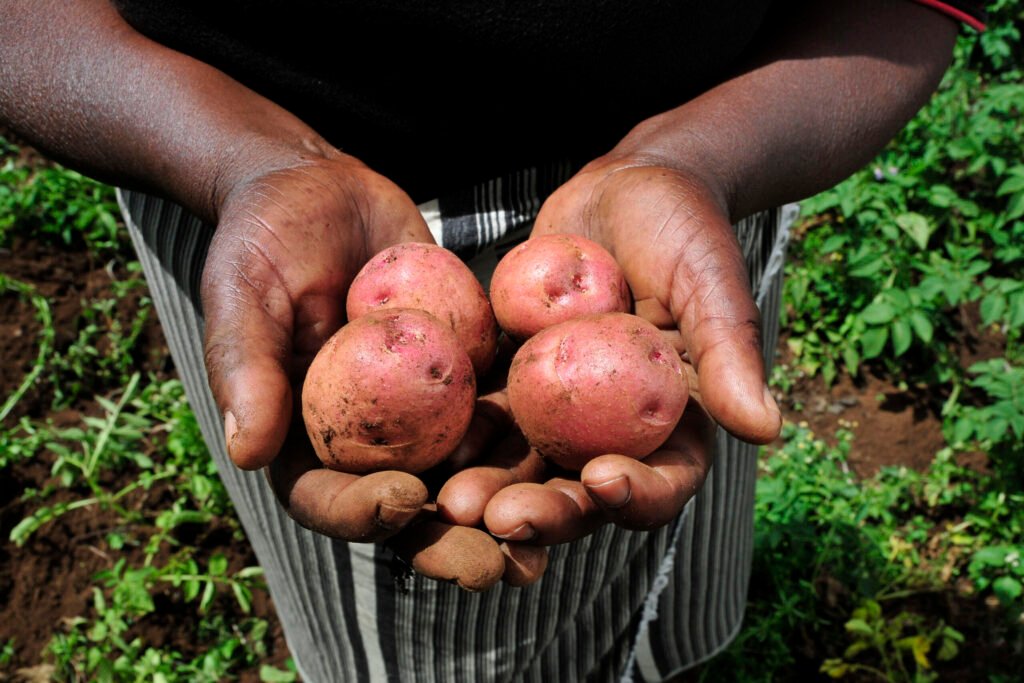
Featured image: Archive photograph of potatoes grown near Mount Kenya in 2010; illustrative only, not the Naivasha congress. CIAT / Wikimedia Commons, CC BY-SA 2.0.
Updated November 2, 2026: The World Potato Congress organiser has published an opening-day report confirming that the 13th congress opened in Naivasha. The event’s advertised dates were October 26–30, 2026. This replaces the earlier preview’s statement that the gathering had not yet taken place.
Before the event, organisers expected more than 1,000 delegates from over 60 countries, according to KNA’s October 12 preview. The organiser’s October 27 opening report described participation from almost 70 countries, but did not provide an audited final attendance count. The forecast and the later description should not be presented as the same statistic.
Why Nakuru is central to the conversation
Nakuru is one of Kenya’s major potato-producing counties. County Chief Officer for Agriculture Joyce Ncece said the region accounts for about 15 percent of national potato production. The congress gives local producers an opportunity to connect with researchers and companies working on seed systems, mechanisation and processing.
For smallholder farmers, the biggest test is whether discussions lead to practical improvements. Reliable access to certified seed, timely disease control, fair markets and better storage facilities can have a more immediate effect on household income than a high-profile conference alone.
Seed quality, disease and unpredictable weather
The advertised programme included sessions on potato varieties, seed production, pest and disease management, post-harvest handling and climate-smart farming. These subjects matter because potato yields are sensitive to planting material, rainfall patterns and crop health.
Farmers should distinguish certified seed from ware potatoes intended for consumption. Seed quality affects crop establishment and the risk of spreading disease between farms. Local agricultural extension officers can help growers identify appropriate varieties and recommended planting practices for their area.
Markets and value addition
The advertised programme included processing, trade and investment. Expanding processing capacity could create more demand for potatoes that meet particular quality specifications, but farmers need clear information about contracts, grading standards and prices before making costly production changes.
Organisers say the congress could support the Kenya Potato Industry Declaration and Investment Plan for 2026–2030. Any resulting commitments will need measurable timelines, funding and public reporting to demonstrate benefits to growers.
What happens next
The programme advertised technical talks, exhibitions and field visits. This update confirms the opening from the organiser’s report; it does not independently verify completion of every advertised activity or the adoption of a final investment declaration. Its significance will be judged not only by the number of international delegates but also by whether farmers gain access to better information, stronger markets and technologies suited to local conditions.
Source: Kenya News Agency, 12 October 2026.
Source update: World Potato Congress: October 27 opening-day report. The original KNA material remains attributed as pre-event context.
