
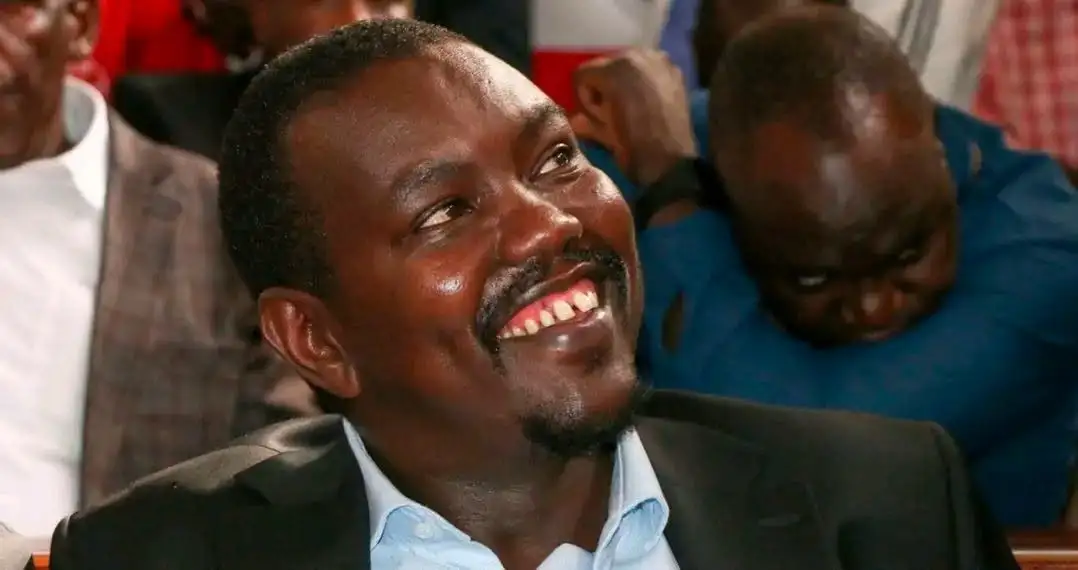
Mandago Acquitted in KSh1.1B Finland Scholarship Case — Sudi Reacts
After more than six years of legal battles, Uasin Gishu Senator Jackson Mandago has walked free. On Thursday, July 23, 2026, a Nakuru court acquitted him and his two co-accused, former County Director of Education Joshua Lelei and former County Finance Officer Meshack Rono, in one of Kenya’s most closely watched corruption cases: the KSh1.1 billion Uasin Gishu Overseas Education Programme scandal.
Here’s a breakdown of why the court let them go, and what the ruling means for the hundreds of families still waiting for answers.
The Legal Reasoning: No Prima Facie Case
The acquittal did not turn on a finding that no crime occurred. It turned on a procedural threshold: whether the prosecution had built a strong enough case even to require the accused to mount a defence.
Senior Principal Magistrate Alloyce (also referred to as Alloys) Ndege ruled that the prosecution had not presented sufficient evidence to warrant placing the three on their defence. Under Kenya’s Criminal Procedure Code, this is a well-established stage in criminal trials: after the prosecution closes its case, the court assesses whether the evidence, taken at face value, could support a conviction. If not, the accused are acquitted without ever having to testify.
Ndege was explicit that the constitutional presumption of innocence drove his decision. He noted that each case must be judged on its own facts, and that the court could not shift the burden of proof onto the accused simply because the case had drawn intense public attention. He drew a pointed contrast between Kenya’s rule-of-law system and a more expedient but unjust alternative, arguing that a system built on due process cannot simply detain suspects on suspicion alone — it must hold prosecutors to the evidentiary standard the law demands.
The court then dismissed all charges of conspiracy to commit a felony, stealing, abuse of office, and forgery — under Section 210 of the Criminal Procedure Code.
What the Prosecution Tried to Prove
The case was not short on effort. Over roughly six years, the Director of Public Prosecutions called more than 130 witnesses, including parents, students, banking officials, and investigators, to trace how the trust fund’s money moved and where it allegedly ended up. Witnesses included bank staff who walked the court through cheques and account records, and a county revolving fund official who testified to receiving KSh700,000 in per diem to accompany then-Governor Mandago on trips to Finland and Canada to sign agreements with universities.
Despite the volume of testimony, the court found the evidence fell short of establishing the specific elements of conspiracy and theft to the legal standard required — a gap between showing that money went missing and proving, beyond the threshold needed to proceed to defence, that these particular defendants criminally engineered it.
The Program That Triggered the Case
The scandal originated in the Uasin Gishu Overseas Education Programme, launched under Mandago’s governorship to help county students enroll in universities in Finland and Canada. Families were asked to contribute up to KSh1 million each into a county-managed trust account to cover tuition, accommodation, and travel. EACC investigations later estimated that parents had paid in approximately KSh957 million.
The programme collapsed publicly in 2021, when students in Finland began reporting unpaid fees and threats of eviction, and the county eventually told parents the fund had run dry. That breakdown, not the criminal trial itself, is what first drew national attention and pushed prosecutors to file charges.
Mandago’s Defence and Reaction
Throughout the trial, Mandago maintained that the programme was a genuine effort to widen access to international education, and that its failure stemmed from foreign intermediaries and currency fluctuations rather than criminal conduct on his part.
After the ruling, he called on any beneficiaries who received support intended for other students to refund the trust fund voluntarily, and urged the current Uasin Gishu County Government to take responsibility for resolving the fallout and compensating affected families.
Reaction from Kapseret MP Oscar Sudi
Not everyone in Kenya Kwanza circles greeted the acquittal warmly. Kapseret MP Oscar Kipchumba Sudi, who has clashed publicly with Mandago over the scandal before, posted a sharply worded reaction on his verified Facebook page hours after the ruling.
Sudi argued that the parents’ money was genuinely lost and that they had already paid in full. He said he had urged Mandago to organize a harambee (fundraiser) to refund the affected families, but that Mandago dismissed the idea and refused to cooperate.
He then went further, alleging without offering evidence that Mandago’s legal spending, including money he claims went toward “kuhonga magistrates” (bribing magistrates), could have covered a substantial share of the debt owed to parents. This is a serious accusation of judicial corruption that has not been independently verified or substantiated through any court process, investigation, or other source, and should be read as Sudi’s personal claim rather than a fact. Mandago has not publicly responded to this specific allegation.
Sudi closed his post by saying he stands with the parents’ pursuit of justice and that “mnyonge hana haki” (the powerless have no rights) under the current circumstances, invoking a higher moral reckoning for those affected.
His post reflects a broader rift within Uasin Gishu’s political class over how the scandal has been handled — even as the criminal case against Mandago has now concluded in his favor.
What Happens Next
The acquittal closes the criminal chapter, but not the underlying grievance. Many parents and former students, some of whom traveled from Eldoret and elsewhere to follow the proceedings, are still pursuing refunds and compensation for disrupted studies. The prosecution has indicated it will review the judgment before deciding whether to appeal.
In short: the court didn’t rule that no wrongdoing happened in the scholarship programme; it ruled that the case built against these three individuals didn’t clear the bar the law sets before someone can be asked to defend themselves.
