
Kenya’s Jet-Fuel Demand Keeps Aviation Supply Chain in Focus
Kenya’s aviation-fuel market is entering a more competitive phase as jet fuel remains an important input for the country’s expanding air-transport network. Official energy planning documents point to continued demand for aviation fuel, while oil marketers are investing in supply, storage and airport distribution capabilities.
The development matters beyond fuel companies. Aviation fuel supports passenger flights, cargo operations, tourism, business travel and regional connectivity. Reliable supply is therefore part of Kenya’s wider transport and energy-security system.
Kenya’s jet-fuel demand remains significant
The Energy and Petroleum Regulatory Authority’s petroleum development plan projects domestic jet-fuel demand at about 1.02 billion litres in 2026 under its baseline scenario. The optimistic scenario puts the projection at about 1.03 billion litres.
The projections show why aviation fuel has become an important segment for oil marketers. Kenya’s international airports require dependable supplies to support passenger and cargo operations, while domestic and regional carriers add another layer of demand.
Rubis has established aviation infrastructure
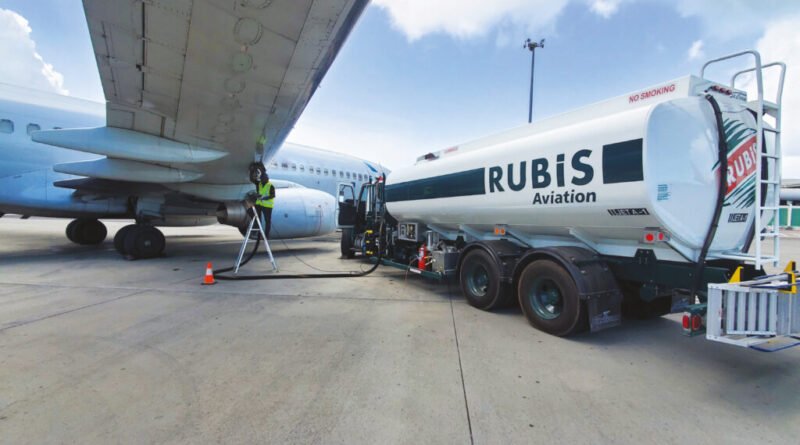
Rubis Energy Kenya says it operates aircraft-refuelling facilities at Jomo Kenyatta International Airport and Wilson Airport in Nairobi, as well as Moi International Airport in Mombasa. The company also says it refuels major passenger and cargo airlines operating through Nairobi and Mombasa.
This infrastructure gives the company a direct role in the aviation-fuel supply chain. It also places responsibility on the operator to maintain safety, quality control, storage capacity and reliable delivery at airports where disruptions can affect multiple airlines.
Why competition matters
Kenya’s aviation market has changed as airlines add routes, frequencies and aircraft capacity. International connections through Nairobi and Mombasa create demand for jet fuel, while domestic and regional carriers add another layer of consumption.
For oil marketers, aviation presents a different commercial environment from roadside petrol and diesel. Jet fuel is supplied through specialised airport infrastructure, and the relationship between marketers, airlines, airport operators and fuel-storage facilities is closely integrated.
The result is a market in which reliability can be as important as price. Airlines need fuel available when aircraft are scheduled to depart, while airports need the distribution system to function continuously.
Jet fuel prices differ from ordinary pump prices
Motorists are familiar with EPRA’s monthly maximum retail prices for petrol, diesel and kerosene. Jet fuel operates differently. The regulated pump-price framework does not set a monthly retail price for aviation fuel in the same way it does for the three road-fuel products.
Commercial negotiations and international market conditions therefore play a major role in aviation-fuel pricing. Airlines and suppliers must manage exposure to crude-oil prices, refined-product prices, exchange rates, shipping and logistics costs.
Airport infrastructure is also important
Kenya’s airport planning recognises the importance of specialised fuel infrastructure. The Jomo Kenyatta International Airport master plan describes a jet-fuel depot that receives fuel, transfers it into storage tanks and supplies a hydrant network used to refuel aircraft.
Such infrastructure is different from an ordinary service station. Storage, filtration, water separation, pumping and quality-control systems must meet aviation requirements before fuel reaches an aircraft.
What stronger competition could mean
Competition between oil marketers can encourage investment in storage, logistics and customer service. Airlines can benefit when suppliers have strong delivery systems and adequate contingency arrangements.
Competition also makes the market sensitive to changes in airline schedules and international fuel conditions. A sudden increase in flights can raise demand quickly, while disruptions to imports or shipping can create pressure on available stocks.
Kenya’s ability to maintain adequate aviation-fuel availability is therefore part of the country’s broader transport and energy-security planning.
The wider economic link
Aviation is closely connected to tourism, trade, investment and employment. When aircraft can be refuelled reliably, airlines can maintain schedules and businesses can depend on predictable air connections.
Mombasa also gives Kenya a second important aviation market. Moi International Airport serves the Coast tourism economy and provides an alternative aviation gateway outside Nairobi. Reliable fuel supply at both airports can therefore support regional economic activity.
What to watch next
- Jet-fuel demand at JKIA and Moi International Airport.
- Investment in aviation-fuel storage and airport distribution systems.
- Competition among oil marketers supplying airlines.
- International crude and refined-fuel price movements.
- Growth in passenger and cargo flights into Kenya.
For Kenya’s aviation industry, competition among suppliers is ultimately about more than market share. A dependable aviation-fuel system supports airlines, airports, tourism, cargo movement and businesses that depend on air connectivity.
Sources and verification
Daily Report KE independently prepared this article using official information from the Energy and Petroleum Regulatory Authority, Rubis Energy Kenya and the Jomo Kenyatta International Airport master plan. No competing news website was quoted as a source.
