
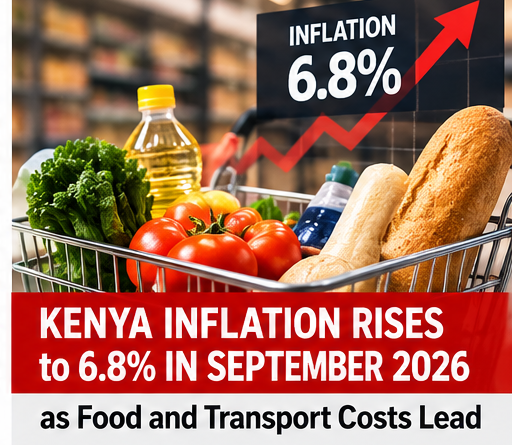
Kenya Inflation Rises to 6.8% in September 2026 as Food and Transport Costs Lead
By Kelvin Kibet | October 1, 2026
Kenya’s annual inflation rate rose to 6.8% in September 2026, up from 6.6% in August, as households continued to face higher food and transport costs, according to the latest data from the Kenya National Bureau of Statistics (KNBS).
KNBS said the Consumer Price Index increased from 155.85 in August to 156.47 in September, producing a 0.4% month-on-month increase.
What Drove September Inflation?
Three major spending categories accounted for most of the pressure on household budgets:
- Food and non-alcoholic beverages: prices were 9.5% higher than a year earlier.
- Transport: prices were 15.6% higher year-on-year.
- Housing, water, electricity, gas and other fuels: prices rose 3.2% over the year.
KNBS says these three divisions together account for more than 57% of the weight used to calculate Kenya’s overall consumer inflation rate, which is why movements in food, fuel, transport and housing-related costs have a large influence on the headline number.
Inflation Has Been Edging Higher
The September reading continues a gradual upward movement in 2026. Annual inflation stood at 6.5% in July and 6.6% in August before rising to 6.8% in September.
That does not mean every product or service became 6.8% more expensive. Inflation is a weighted average of price changes across a broad basket of goods and services. Some items rise faster, some more slowly, and some can fall in price even while the overall index increases.
What the 0.4% Monthly Increase Means
The 6.8% figure compares September 2026 with September 2025. The separate 0.4% monthly inflation rate compares September with August 2026.
For households, the monthly figure is useful because it shows whether the cost of the consumer basket is still moving upward in the short term. September’s data show that the general price level continued rising during the month.
Why Food Inflation Matters So Much
Food takes a significant share of spending for many Kenyan households. A 9.5% annual rise in the food and non-alcoholic beverages category can therefore be felt quickly, especially by families whose incomes do not rise at the same pace.
Higher food prices can also affect restaurants, schools, hotels and other businesses that purchase food in large quantities, although the impact differs by product and business model.
Transport Remains the Fastest-Rising Major Category
Transport inflation stood at 15.6% year-on-year in September, considerably above the overall inflation rate. Transport costs can affect households directly through fares and fuel-related spending, and indirectly because businesses often factor distribution and logistics costs into prices.
What This Means for Interest Rates
The Central Bank of Kenya’s Monetary Policy Committee is scheduled to meet on October 7, 2026. The Committee will consider a range of domestic and international economic indicators, including inflation, before making its next interest-rate decision.
The Central Bank Rate currently stands at 8.75% after the MPC retained it at that level in August. A rise in inflation does not automatically determine what the Committee will do; monetary policy decisions also consider economic growth, exchange-rate conditions, credit developments and global risks.
What Households Should Take From the Data
The most important takeaway is that overall prices are still rising, with food and transport exerting the greatest pressure. Households may therefore continue to feel a squeeze even when inflation remains below levels seen during more severe price shocks.
For readers tracking living costs, the next important inflation release will be KNBS’s October 2026 Consumer Price Index report, which is scheduled for the end of October.
