
Government and KEMSA Urge Stronger Pharmacy Leadership to Improve Medicine Availability
NAIROBI, 13 October 2026 — Government health officials and the Kenya Medical Supplies Authority have called for stronger pharmacist leadership to improve the availability and safe use of essential medicines.
Hospital records and procurement
Speaking at the KEMSA supply-chain conference in Naivasha, Medical Services Principal Secretary Ouma Oluga called for better cooperation between pharmacists and other clinicians, according to KBC’s October 12 report. KEMSA chief executive Waqo Ejersa urged facilities to share consumption figures and information about slow-moving or near-expiry stock.
Those records help distinguish a purchasing problem from a distribution or stock-management problem. A national procurement total alone cannot establish whether a particular patient received the prescribed medicine.
Why it matters
For patients, the practical issue is whether prescribed medicines are available when needed, whether supplies are stored correctly and whether shortages are communicated early enough to prevent interrupted treatment.
The medicine supply chain
Medicine availability depends on forecasting, procurement, quality assurance, warehousing, distribution and accurate facility-level records. A delay at any stage can affect patients even when national procurement plans appear adequate. Pharmacists also help ensure medicines are dispensed safely and that patients receive understandable instructions.
Questions for health facilities and patients
Facilities can monitor stock-outs, expiry dates and emergency orders. Patients should ask their clinician or pharmacist about an appropriate alternative if a prescribed medicine is unavailable; changing or stopping treatment without professional guidance can be unsafe. Public reporting on supply performance should identify which facilities and products are covered, rather than relying on broad assurances.
What readers should watch next
Hospitals and procurement agencies can use stock data to anticipate demand and identify delays. Better information alone is insufficient, however, unless purchasing decisions, distribution schedules and accountability systems respond to what the data shows.
Reporting source: Government, KEMSA call for stronger pharmacist leadership to ensure medicine availability, protect patients — KBC. Published as a 13 October 2026 news update based on reporting from 12–13 October.
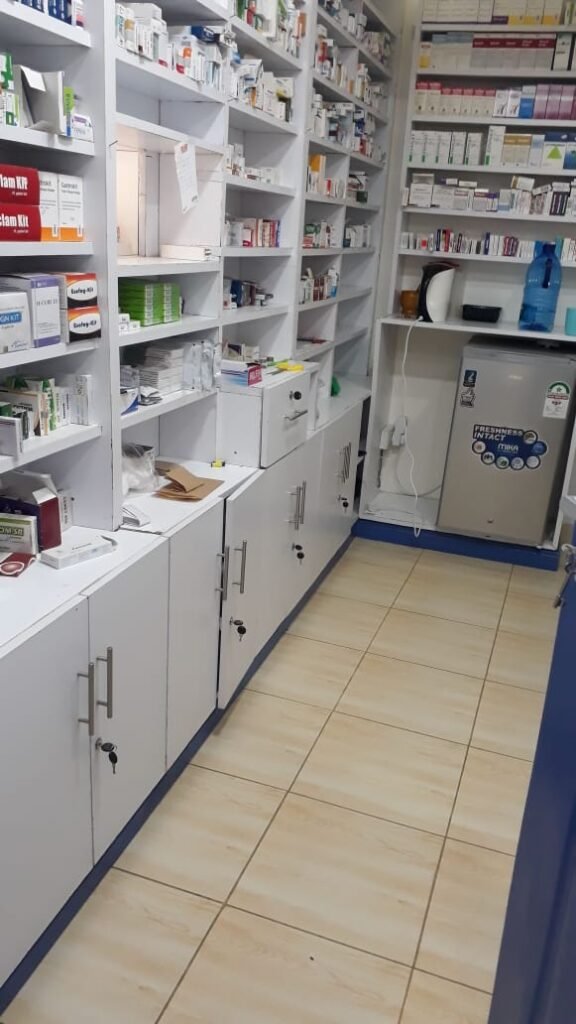
Featured image is illustrative and does not show the reported event. Photo: Seldonslukoye / Wikimedia Commons, CC BY-SA 4.0. Original image and licence.
