
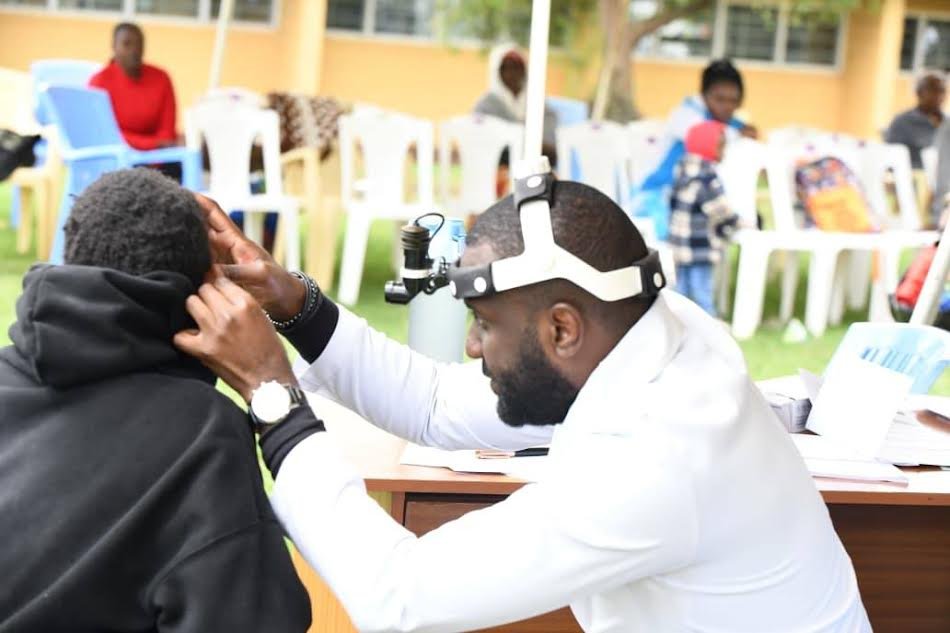
ENT Specialists in Nakuru Urge Routine Screening to Address Rising Hearing Loss in Kenya
By Kelvin Kibet | Updated October 1, 2026
Health specialists in Nakuru are encouraging routine hearing checks and earlier treatment as Kenya expands screening, referral and specialist ear-care services.
Why early screening matters
Hearing problems can affect speech development, classroom learning, communication and social participation. Some conditions are treatable or manageable when identified early, which is why health workers encourage parents and adults to seek assessment when they notice persistent hearing difficulty, recurrent ear discharge or delayed speech.
Kenya is expanding ear and hearing services
In September 2026, the Ministry of Health announced a programme to strengthen eye, ear and hearing services in Nakuru, Mombasa and Kakamega counties through expanded screening, referral, treatment and follow-up care.
The Ministry said Kenya recorded 837,416 cases of ear disease in 2022, including 264,789 among children under five. It also cited estimates that about 15% of adults above 50 experience hearing problems and that 14 in every 1,000 children live with moderate to severe hearing loss.
What can contribute to hearing loss?
Possible causes vary by age and circumstance. They include infections, congenital conditions, prolonged exposure to loud noise, ageing, some medicines and complications from other illnesses. Only a qualified health professional can determine the cause in an individual case.
When to seek medical assessment
Persistent difficulty hearing, recurring ear pain or discharge, sudden hearing changes, or delayed speech in a child should be assessed by a healthcare professional. Sudden or severe symptoms may require urgent medical attention.
What treatment can involve
Treatment depends on the diagnosis and can range from medicine or simple procedures to hearing aids, surgery, rehabilitation or specialist referral. A screening result alone is not a diagnosis, which is why follow-up care matters.
Parents and schools have a role too
Teachers and parents are often the first to notice that a child is not responding consistently to sound, is falling behind in speech development or appears to struggle in class. Those signs do not automatically mean hearing loss, but they are a reason to seek professional assessment rather than wait for the problem to become more pronounced.
