
U.S. Embassy Issues Health Alert After Kenya Confirms First Ebola Case
The United States Embassy in Nairobi has issued a health alert following Kenya’s confirmation of its first imported case of Bundibugyo Ebola virus disease, urging U.S. citizens in Kenya to follow official health guidance and take precautions against exposure.
The alert, dated October 6, 2026, follows confirmation by Kenya’s Ministry of Health that a Kenyan citizen who had been living in the Democratic Republic of the Congo tested positive for Bundibugyo virus after arriving in Nairobi. The patient later died.
The development has prompted intensified contact tracing, traveller screening and preparedness measures in Kenya. However, it is important to distinguish the new U.S. Embassy health alert from Kenya’s broader U.S. State Department travel advisory. The State Department currently lists Kenya at Level 2, meaning travellers should “exercise increased caution.” The health alert does not, by itself, amount to a newly announced elevation of Kenya’s overall travel-advisory level.
What the U.S. Embassy alert says
In its official notice, the U.S. Embassy said the Government of Kenya had reported a case of Bundibugyo virus disease and directed Americans to remain informed through Kenyan health authorities and official U.S. government health guidance.
The alert comes as the United States continues to monitor a much larger Bundibugyo Ebola outbreak centred in the Democratic Republic of the Congo. The U.S. Centers for Disease Control and Prevention says the risk to the American public remains low, while maintaining specific travel and entry measures for people with recent travel in countries affected by the regional outbreak.
For Kenya, the immediate public-health focus is identifying people who may have had contact with the confirmed patient and rapidly detecting any possible secondary infections.
Kenya says there is no declared Ebola outbreak
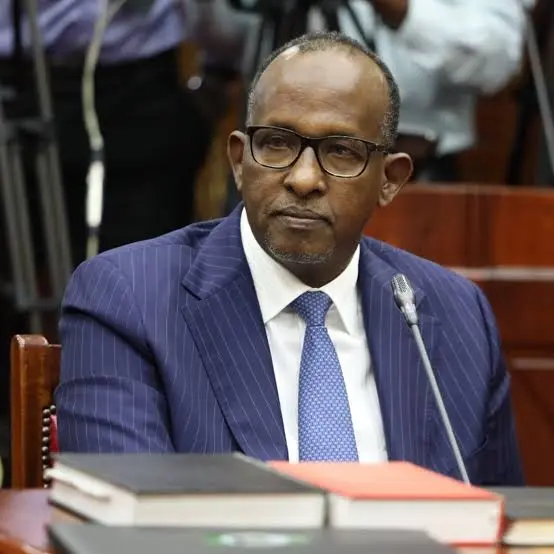
Health Cabinet Secretary Aden Duale said on October 7 that Kenya is not experiencing an Ebola outbreak, despite the single imported confirmed case.
According to the Ministry of Health’s latest update, authorities had identified 57 contacts linked to the case. Ten had been accounted for and placed under quarantine at the National Police Service Hospital in Nairobi, while tracing and follow-up efforts for the remaining contacts were continuing.
The Ministry also outlined isolation capacity at five designated facilities: Kenyatta National Hospital, Moi Teaching and Referral Hospital, National Police Service Hospital, Port Reitz Hospital and Nairobi Hospital. It said capacity could be expanded if required.
Screening has also been strengthened at points of entry, particularly for travellers arriving from countries considered relevant to the ongoing regional Ebola response. Authorities have asked travellers to complete health declaration forms accurately so that contact tracing can be carried out quickly when necessary.
What is known about Kenya’s confirmed case
The Ministry of Health said the patient was a Kenyan citizen who had been living in the Democratic Republic of the Congo. He travelled by road to Kampala before flying to Nairobi on October 3.
After arriving at Jomo Kenyatta International Airport, he was taken to Nairobi Hospital and isolated. Samples were tested independently by the National Virology Reference Laboratory and the Kenya Medical Research Institute, with both confirming Bundibugyo virus disease.
The World Health Organization said the patient died on the night of October 5 and was buried on October 6 under Kenya’s safe and dignified Ebola burial protocol.
WHO said Kenya had screened more than 652,000 travellers since heightened Ebola preparedness began and had trained about 5,000 health workers in prevention and management. The organisation is supporting surveillance, case investigation, laboratory readiness, infection prevention and risk communication.
WHO advises against travel or trade restrictions on Kenya
Despite the imported case, the World Health Organization has advised against imposing restrictions on travel to, or trade with, Kenya, Uganda or the Democratic Republic of the Congo on the basis of the information currently available.
That guidance is significant for travellers and businesses because a confirmed imported case does not automatically mean that international health authorities recommend avoiding Kenya. Individual governments can issue their own health and travel guidance, and travellers should therefore check the latest official information before departure.
What travellers and residents should do
Kenya’s Ministry of Health has urged the public to remain vigilant without panicking. People should practise regular hand hygiene, avoid direct contact with the blood or body fluids of anyone suspected of having Ebola, and seek medical care promptly if symptoms develop after a possible exposure.
Bundibugyo virus disease can spread through direct contact with the blood or other body fluids of an infected person, or through contaminated materials. WHO says there is currently no approved vaccine or specific treatment for Bundibugyo virus disease, although supportive clinical care can improve outcomes and candidate medical products are being evaluated.
Anyone in Kenya concerned about possible exposure or symptoms should contact a recognised health facility and follow Ministry of Health instructions. The Ministry has also directed the public to its toll-free health information line, 719, for guidance.
Official sources
This report is based on primary public-health and government records. Readers can follow updates from the U.S. Embassy in Nairobi, the Kenya Ministry of Health, the World Health Organization and the U.S. Department of State.
Featured image: Archive photograph of Health Cabinet Secretary Aden Duale, August 2, 2024. The image predates the October 2026 Ebola case and is used for identification/context.
