
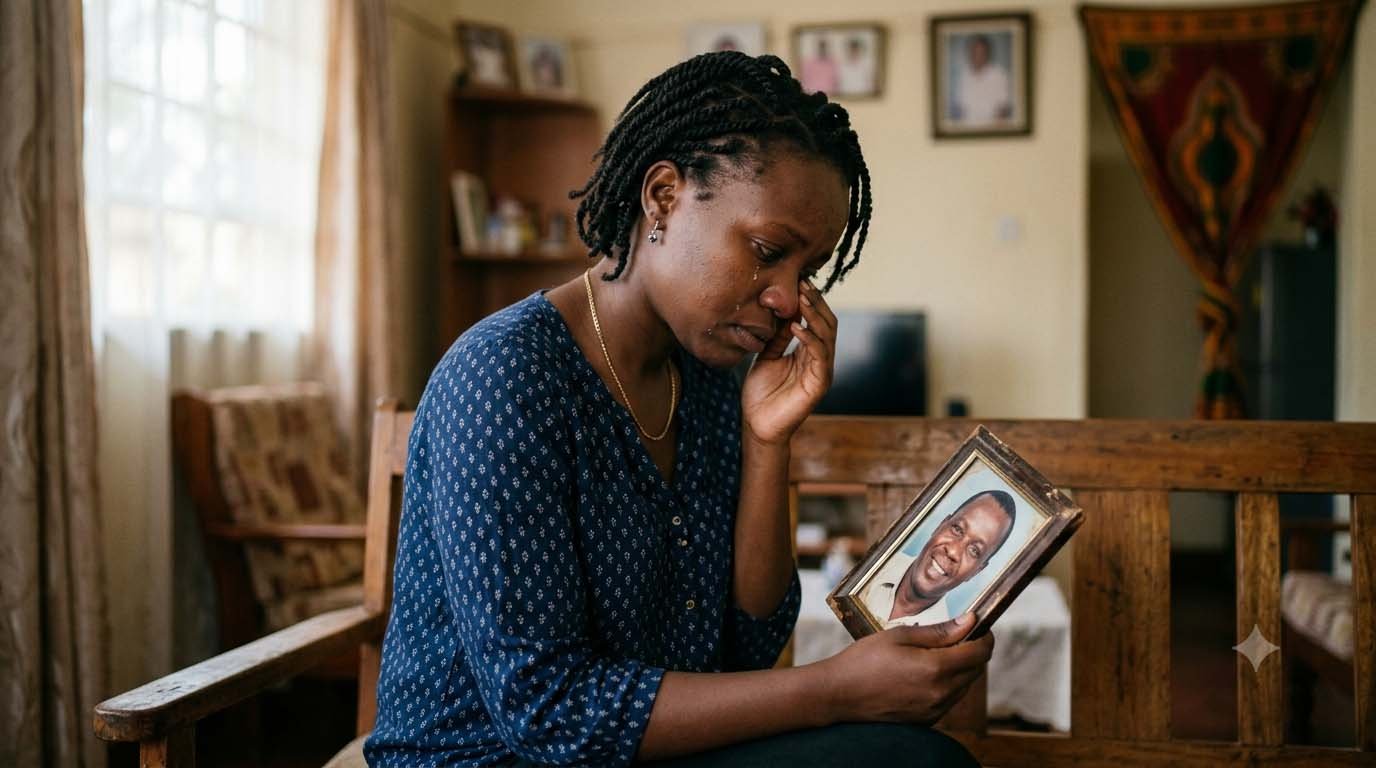
Losing a Parent Without Warning: Coping With Grief After a Sudden Road Accident
Some months carry no weight at all; they come and go, unremarkable, forgettable. And then, for some of us, one ordinary month becomes the one we can never say out loud again without our chest tightening. A phone call. A knock on the door. And suddenly the person who was there yesterday is simply gone.
That’s what a sudden road accident does. It doesn’t ask permission. It doesn’t wait until the kids are grown, the debts are settled, or the “I love yous” have all been said one last time. It just happens on an ordinary Wednesday evening, on an ordinary road, taking someone who was never supposed to leave that soon.
If you’ve lived through this, you know there’s no gentle way to describe it. One moment you have a father. The next, you’re planning a funeral.
“It Will Be Okay” Except It Won’t, Not Really
We’ve all heard it. Someone means well and says, it’ll be okay; time heals. And maybe, eventually, some kind of okay does arrive. But not the old kind. Not the kind where you pick up the phone and hear that voice again.
For many people who lose a parent this way, the hardest truth isn’t the funeral; it’s every ordinary day afterward that keeps proving the loss is real. Grief counselors call this “traumatic grief,” the mix of mourning and shock that comes from a death nobody saw coming. It tends to linger differently than a loss you had time to prepare for. There’s disbelief that outlasts the burial. There are ambushes: a chair nobody sits in anymore, a ringtone, a nickname only one person on earth ever used for you.
The “I Wish” List Everyone Seems to Carry
Talk to enough people who’ve lost a parent suddenly, and you’ll notice something they almost all share: a quiet, private list of things they wish they’d said or done. The call they meant to return. The plan to send money home “next payday.” The visit they kept pushing to next month, sure there’d always be a next month.
None of this is about doing anything wrong. It’s simply what happens when you never got the memo that time was running out. Counselors will tell you this is one of the most common — and most painful — parts of sudden loss: the mind keeps replaying the tape, searching for the version where there was still time to say thank you, or I love you, or I’m sorry, just once more.
What Helps
There is no formula for healing after this kind of loss, but people who have walked through it and those who support them often point to a few things that matter:
- Naming the loss out loud. Saying “my father died” rather than softer phrases can, over time, help the reality settle rather than stay suspended in disbelief.
- Holding on to the specific, small memories. A parent’s laugh, a phrase they always used, the way they said a name these details, not the big milestones, are often what people miss most, and what they most want to remember.
- Letting comfort come without needing it to fix anything. Support from family, friends, or community doesn’t erase the loss, but it can make the weight of it easier to carry, day by day.
- Being patient with the timeline. There is no set period after which grief is supposed to end. For many, certain months the anniversary, a birthday remain difficult indefinitely, and that is not a failure to heal; it is simply love with nowhere left to go.
A Family, Rearranged Overnight
When a parent dies without warning, a family doesn’t just lose a person; it loses a future it had quietly assumed would be there. Sunday lunches, birthdays, ordinary Tuesday phone calls, all of it gets rearranged around an absence nobody chose.
For the children left behind, there’s a particular kind of ache in building a life, a career, a family of your own, small wins without the one person you most wanted to hand it to. Long after the funeral, so many of us still catch ourselves reaching for the phone, wanting to say: look what I did. I hope I made you proud.
Grief like this doesn’t really end. It just changes shape. The sharp, disorienting pain of the first weeks eventually softens into something quieter, something you learn to live alongside an ongoing, one-sided conversation with someone who can’t answer anymore, but who somehow never fully leaves either.
