
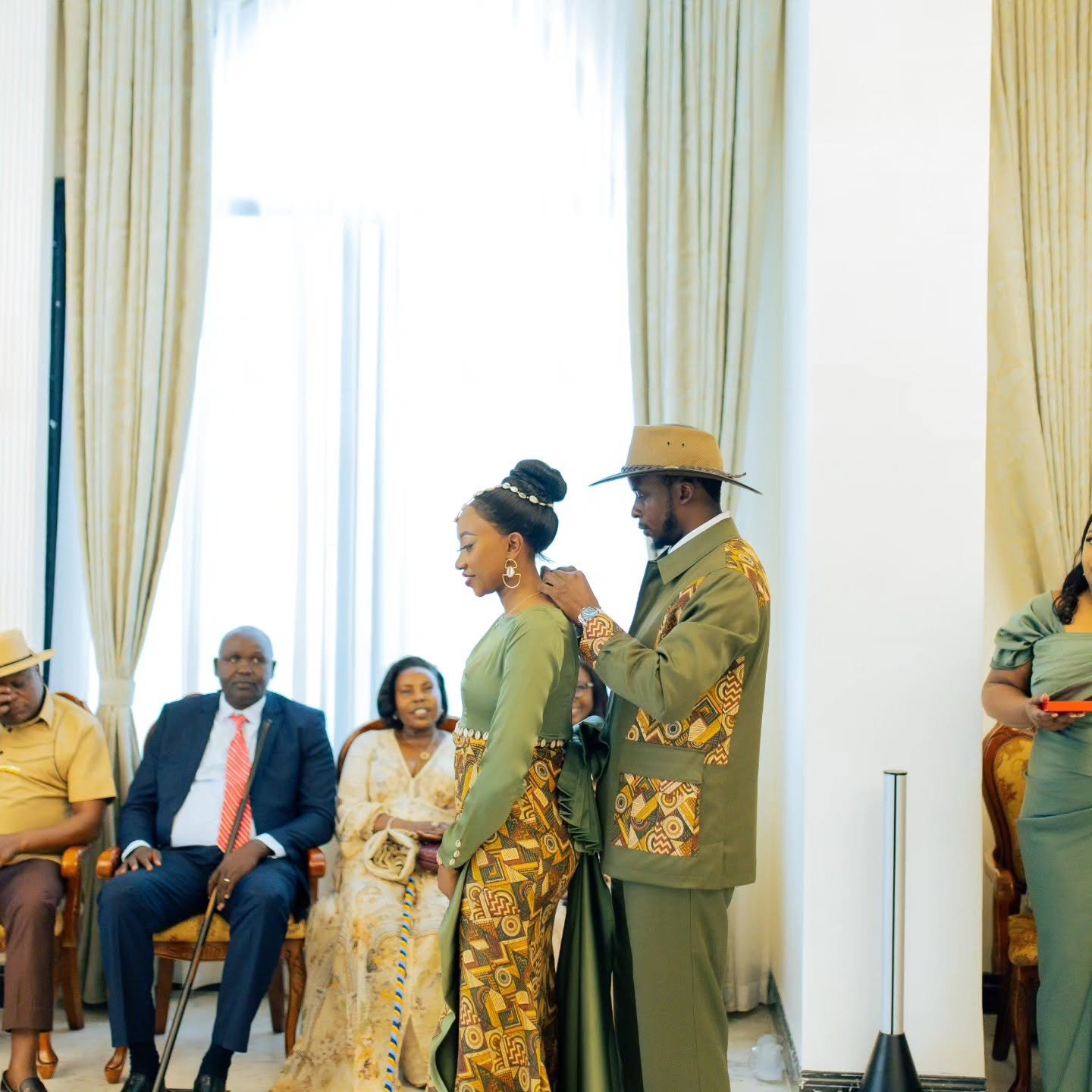
Inside Charlene Ruto’s Koito: Kalenjin Tradition Meets the Public Eye
On Saturday, August 8, 2026, President William Ruto and First Lady Rachel Ruto opened the gates of their Intonna Heritage Farm in Naserian Village, Kilgoris, Narok County, for one of the most talked-about family occasions of the year: the traditional Kalenjin engagement of their daughter, Charlene Chelagat Ruto, to Tanzanian tech entrepreneur Isaya Yunge, founder of SomaApp.
The event, formally titled “Koito ak Chaik,” combined two rites in one day: an engagement and a farewell, and it turned a private family milestone into a moment of genuine national conversation, not just because of who the bride is, but because of what the ceremony represents.
What Is Koito, and Why Does It Matter?
Among the Kalenjin, Koito is the formal process through which two families come together to recognize, bless, and negotiate a union between their children. Traditionally, it is the stage at which the groom’s family visits the bride’s home to hold dowry discussions and confirm that both families are ready to support the marriage. The “Chaik” portion of the ceremony is the farewell, the moment a daughter is symbolically released from her parental home as she prepares to build a life with her husband.
Unlike a church or civil wedding, Koito is community-centred rather than couple-centred. It leans heavily on the participation of elders, extended relatives, and clan representatives, and it reflects an understanding of marriage as something the whole family and community carry together, not simply a contract between two individuals. Bridewealth negotiations, blessings, cultural songs and dances, and traditional attire all form part of the day, though the specific customs can vary between Kalenjin sub-communities.
One detail that caught public attention was the sight of senior leaders including the President himself, Deputy President Kithure Kindiki, Prime Cabinet Secretary Musalia Mudavadi, and Kapseret MP Oscar Sudi carrying long black sticks during the ceremony. Far from being simple walking aids, the sticks are a recognised Kalenjin symbol of authority, wisdom, and responsibility. An elder who carries the stick during a Koito is not attending merely as a guest; he is participating in the negotiation and blessing process itself, and the staff has traditionally reminded younger generations that marriage in Kalenjin culture is a union anchored by family and community oversight, not just romance.
A Farm Full of Firsts
Charlene’s Koito had all the trappings of both a cultural rite and a state-adjacent event. Helicopters reportedly ferried some guests to the farm. The guest list read like a cross-section of Kenya’s political establishment: Cabinet Secretaries Aden Duale and Kipchumba Murkomen, Nairobi Governor Johnson Sakaja, nominated Senator Karen Nyamu, MPs Felix Odiwuor (Mulamwah) and Linet Toto, Nairobi Woman Representative Esther Passaris, and Tourism Principal Secretary Julius Bitok among them.
At the centre of it all was a delegation from Mwanza, Tanzania, relatives of the groom, whom President Ruto personally welcomed and thanked for making the journey, describing their presence as central to the occasion. Charlene herself later posted about the emotional side of preparing for the day: waking at 5 a.m. to get ready with the women in her life, the dress that was remade in a single day after her original gown didn’t work out, and her gratitude for her family and community’s support through the dowry negotiations.
Both President Ruto and First Lady Rachel Ruto shared warm messages afterward. Ruto’s post celebrated the start of “a beautiful new chapter” for his daughter and her fiancé, while Mama Rachel’s message spoke of watching Charlene grow into “the beautiful woman” she has become and blessing her new home with love, patience, and peace.
There was also a lighter, more human moment caught on camera: the President was recorded jokingly advising the room, including Larry Madowo, that “it’s good to be single, it’s better to be married, and it’s best to have children,” a line that drew laughter from guests and quickly circulated online.
The Larry Madowo Moment
If there’s one thing that pulled Charlene’s Koito beyond entertainment pages and into political Twitter/X debate, it was the presence of CNN international correspondent Larry Madowo.
Madowo has built a reputation as one of the more prominent Kenyan journalists willing to hold the Ruto administration to account, from his coverage of the 2024 anti-government protests and allegations of police violence, to more recent criticism of state event planning. So when he turned up at the President’s family farm, smiling and mingling with Ruto, the First Lady, and senior government figures, it did not go unnoticed.
Kenyans on social media reacted swiftly. Critics accused him of cosying up to the very establishment he had spent years scrutinising, with some declaring they could no longer trust his reporting and others accusing him, pointedly, of “laughing with our oppressors.” His name trended on X as the “cancel Larry” conversation took off.
Madowo, for his part, did not shy away from the backlash. He leaned into it, publicly embracing the “Cancel Larry Madowo” label while making clear that his attendance had nothing to do with politics and everything to do with friendship, Isaya Yunge, the groom, is someone he has known personally for years, with old footage of the two of them chatting casually in Helsinki resurfacing after the ceremony as proof of the friendship’s depth. Madowo’s celebratory message for the couple made his position plain: pride in “my little brother Isaya” for winning Charlene’s hand, and a welcome to the Tanzanian side of the family.
Not everyone piled on. Some commentators pushed back on the backlash itself, arguing that expecting public figures to sever all personal relationships with government officials over political disagreements was an unreasonable, even envious standard, and that friendship existing alongside professional criticism isn’t automatically hypocrisy.
A Private Milestone, A Public Conversation
What makes Charlene Ruto’s Koito notable isn’t just the scale of the guest list or the cultural pageantry; it’s the way it sat at the intersection of tradition, family, and public life. For the Ruto family, it was a deeply personal occasion: a father giving cultural voice to his pride in his daughter, a mother blessing her child’s next chapter, relatives travelling from Mwanza to be embraced into the fold. For the country, it became something else entirely: a moment to debate press independence, political access, and where the line between “friend” and “government insider” should sit for a journalist covering the very family hosting the party.
Both things can be true at once. Koito ak Chaik remains a living, valued part of Kalenjin identity, a ceremony that continues to hold its ground even as church and civil weddings dominate modern Kenyan life. And because it was the President’s daughter’s Koito, it also became, briefly, a referendum on journalistic boundaries in an unusually personalised political culture.
Charlene and Isaya’s story is, at its core, a simple one: two families, a farm in Kilgoris, and a Kalenjin custom that has bound people together for generations. The noise around Larry Madowo’s attendance says less about the ceremony itself and more about how tightly politics and personal life are now woven together in Kenya’s public sphere.
Frequently Asked Questions
What is a Koito ceremony? Koito is a traditional Kalenjin engagement rite in which the families of a bride and groom formally meet, negotiate bridewealth, and bless their children’s union ahead of marriage.
What does “Koito ak Chaik” mean? “Koito” refers to the formal engagement and dowry-negotiation process, while “Chaik” is the farewell portion, marking the bride’s send-off from her parental home.
Who did Charlene Ruto get engaged to? Charlene Ruto, daughter of President William Ruto and First Lady Rachel Ruto, got engaged to Isaya Yunge, a Tanzanian tech entrepreneur and founder of SomaApp.
Where was Charlene Ruto’s Koito held? The ceremony took place on August 8, 2026, at the Ruto family’s Intonna Heritage Farm in Naserian Village, Kilgoris, Narok County.
Why did Larry Madowo attending Charlene Ruto’s Koito cause backlash? Madowo, a CNN correspondent known for reporting critically on the Ruto administration, faced online criticism for attending a family event hosted by the President. He responded that his attendance was rooted in a personal friendship with the groom, not politics.
