
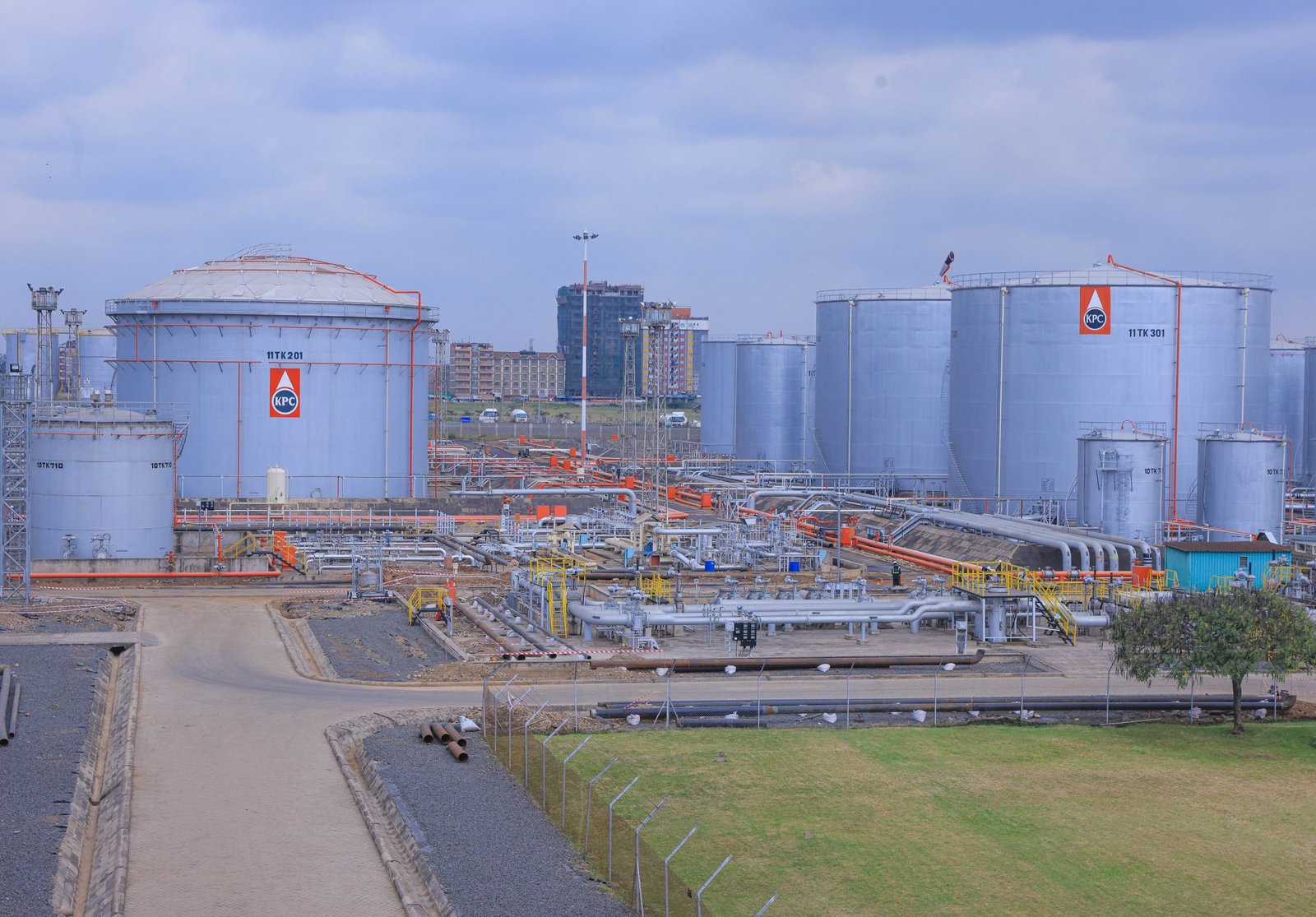
Kenya’s capital markets have received a major boost after the Kenya Pipeline Company (KPC) Initial Public Offering (IPO) attracted overwhelming investor interest, closing 5.7 percent oversubscribed. The strong response signals growing confidence in Kenya’s privatization agenda and the country’s strategic energy infrastructure.
According to the National Treasury, investors applied for 12,486,078,724 shares, significantly exceeding the 11,812,644,350 shares offered to the market. The IPO therefore achieved an overall subscription rate of 105.7 percent, reflecting robust demand from both local and regional investors.
Treasury Cabinet Secretary John Mbadi announced the results on March 4, 2026, describing the performance as a strong endorsement of the government’s policy to partially privatize key state corporations.
“Having received full subscription of the offer shares signals a resounding vote of confidence in the government’s privatisation agenda,” Mbadi said.
The IPO, which ran between January 19 and February 24, 2026, drew participation from more than 70,000 retail investors, alongside institutional investors and regional buyers.
Kenyans Take the Largest Share
The share allocation reveals a deliberate effort by the government to ensure broad participation while maintaining significant Kenyan ownership of the strategic energy asset.
Kenyan investors—both individuals and institutions—secured the largest portion of the shares, reflecting strong domestic appetite for investment opportunities in national infrastructure.
Allocation Breakdown
- Kenyan Individual and Institutional Investors: 7,951,752,222 shares (67.32%)
- East African Community (EAC) Investors: 3,857,024,178 shares (32.65%)
The strong local participation reinforces the government’s objective of ensuring that Kenyans maintain majority ownership in critical national assets even as the company transitions to public ownership.
Government Maintains Strategic Control
Although the IPO opened the company to private investors, the government remains the largest single shareholder, retaining a 35 percent stake in the pipeline operator.
The listing has, however, significantly diversified the company’s ownership structure across several stakeholder groups.
New Ownership Structure
- Local Institutional Investors (Pension funds & banks): 40.99%
- Government of Kenya: 35%
- EAC Investors (including Uganda and Rwanda): 21.22%
- Retail Investors: 2.6%
- KPC Employees: 0.06%
- Oil Marketers: 0.014%
- Foreign Investors: 0.02%
The structure positions the company as a regional energy infrastructure player while preserving local control.
Government Sticks to Sh106.3 Billion Target
Despite the oversubscription, the government has confirmed it will not increase the size of the offer, choosing instead to maintain fiscal discipline.
Treasury CS Mbadi stated that the state will only accept the originally targeted Sh106.3 billion from the sale.
“Following the oversubscription of KPC, the government will only accept what it targeted — the Sh106.3 billion, nothing more or less,” Mbadi explained.
As a result, funds paid for the extra 5.7 percent in over-applied shares will be refunded to investors starting Friday.
Strategic Impact on Kenya’s Energy Sector
The successful IPO is expected to strengthen Kenya Pipeline Company’s financial flexibility, enabling the firm to access additional capital markets funding for expansion projects.
KPC operates one of the most important petroleum infrastructure networks in East Africa, transporting fuel from the port of Mombasa to inland depots and neighboring countries.
According to the Treasury, the capital raised will support:
- Expansion of pipeline capacity
- Improvement of fuel storage facilities
- Development of refining capabilities
- Strengthening of regional energy supply chains
Mbadi noted that the listing transforms KPC into a more competitive and transparent entity capable of playing a larger geopolitical role in East Africa’s petroleum industry.
With its strategic location and extensive pipeline network, the company is expected to deepen energy integration across the region while supporting Kenya’s ambition to remain the regional petroleum distribution hub.
A Milestone for Kenya’s Capital Markets
The oversubscription of the Kenya Pipeline IPO highlights the growing maturity of Kenya’s capital markets and the rising appetite among investors for infrastructure-backed investments.
For policymakers, the success provides a strong signal that well-structured privatization programs can attract both domestic and regional capital, while maintaining national economic interests.
As the shares begin trading, analysts will closely watch how the newly listed company performs on the market and whether the listing encourages more state-owned enterprises to follow a similar path to public ownership.