
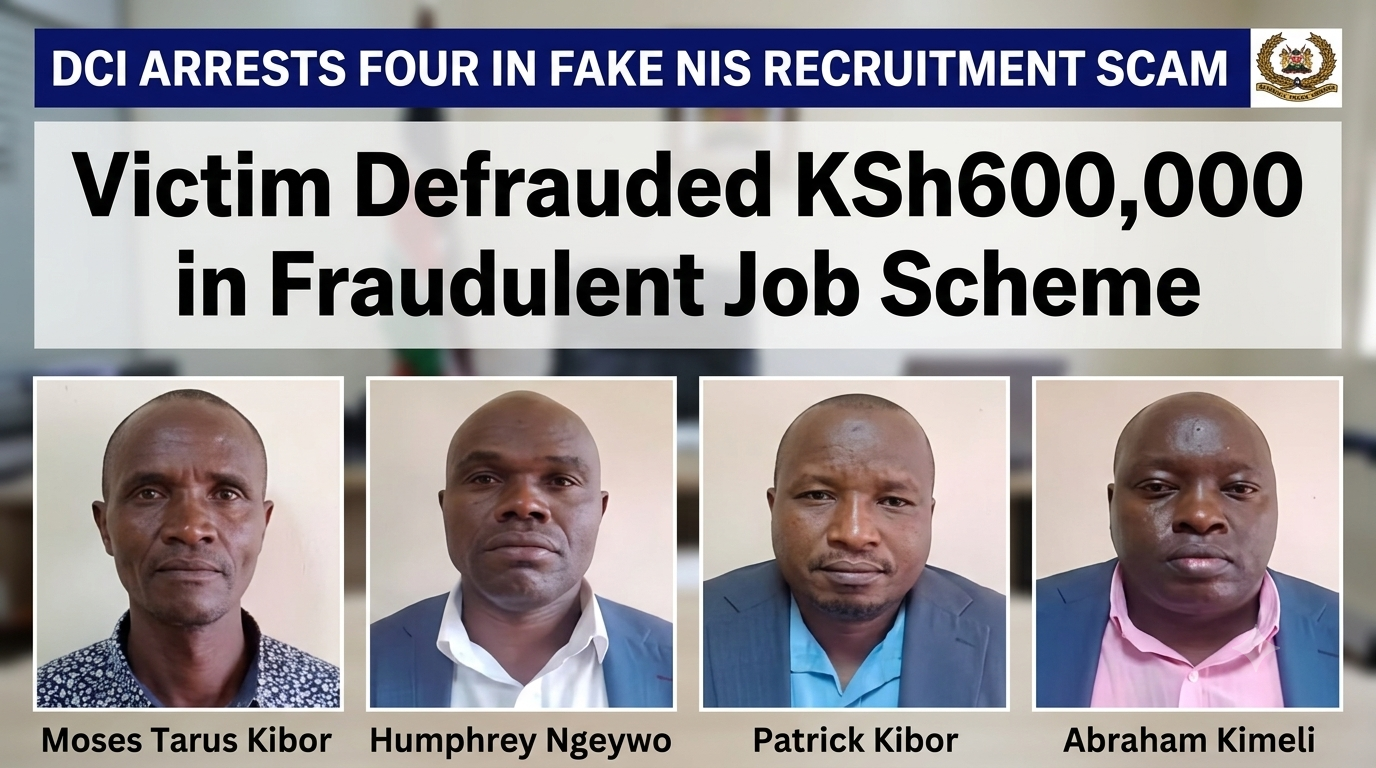
NIS Recruitment Scam Exposed: 4 Suspects Arrested Over Ksh 600,000 Fraud
Table of Contents
A NIS recruitment scam has led to the arrest of four suspects by detectives from the Directorate of Criminal Investigations (DCI), after job seekers were falsely promised recruitment into the National Intelligence Service (NIS).
In a statement issued on Friday, the DCI said the arrests followed an investigation by detectives from DCI Central in Nairobi. The probe was triggered by a complaint from a woman who reported losing Ksh 600,000 after allegedly being promised a job with the intelligence agency. Cases like this NIS recruitment scam highlight how convincing fraudsters can be when targeting desperate job seekers.
How the NIS Recruitment Scam Was Uncovered
The case came to light after the victim reported the matter to detectives, prompting DCI Central in Nairobi to open a full investigation. According to the DCI, the suspects had built an elaborate scheme designed to convince the complainant that a genuine job offer was on the table.
The four suspects have been identified as Patrick Kibor, Moses Tarus Kibor, Humphrey Ngeiywo Kutuli, and Abraham Kimeli. All four were apprehended as part of the same operation.
Fake Calling Letter Used to Build Trust
Central to this NIS recruitment scam was a fake NIS calling letter, issued to the complainant to make it appear she had successfully secured a position. Investigators say this forged document played a key role in convincing the victim that the opportunity was genuine, prompting her to part with a significant sum of money.
Scammers often rely on official-looking paperwork, letterheads, and stamps to lend false credibility to fraudulent job offers, a tactic consistent with patterns flagged in past cases by the Ethics and Anti-Corruption Commission.
Documents Recovered, Forensic Examination Underway
During the arrests, detectives recovered several documents believed to be connected to the alleged fraud. These are now undergoing forensic examination to verify their authenticity and help investigators establish just how far the scheme may have reached.
The DCI says all four suspects remain in custody as police continue processing the case ahead of their arraignment in court.
Why the NIS Recruitment Scam Keeps Happening in Kenya
This is far from an isolated case. Kenya continues to grapple with high youth unemployment, and fraudsters routinely exploit that desperation by promising fast-tracked entry into coveted government jobs intelligence, police, army, and civil service positions among the most commonly impersonated.
According to consumer protection guidance from the Federal Trade Commission, red flags common to this kind of employment fraud include requests for upfront payment, pressure to act quickly, and unofficial communication channels patterns that closely mirror what played out in this NIS recruitment scam case.
In its statement, the DCI reiterated that recruitment into government agencies follows clearly established procedures and never requires applicants to part with money at any stage. The agency urged members of the public who are asked for payment in exchange for job opportunities to report such incidents to law enforcement immediately.
How to Protect Yourself From an NIS Recruitment Scam
Job seekers can reduce their risk of falling victim to a scheme like this one by taking a few precautions:
- Apply only through official government recruitment portals, never through intermediaries who ask for a fee.
- Treat any request for payment in exchange for a job offer as an immediate red flag.
- Verify calling letters or offer letters directly with the relevant institution rather than trusting the document alone.
- Be wary of anyone claiming insider access or connections that can “fast-track” an application.
- Report suspicious recruitment offers to the DCI or nearest police station right away.
The case adds to a growing list of employment scams targeting job seekers in Kenya, where fraudsters continue to exploit high unemployment by falsely claiming they can secure positions in government institutions or other organisations in exchange for cash. Authorities have repeatedly cautioned the public that hiring into public service is handled strictly through official channels, with no payment ever required at any point in the
