
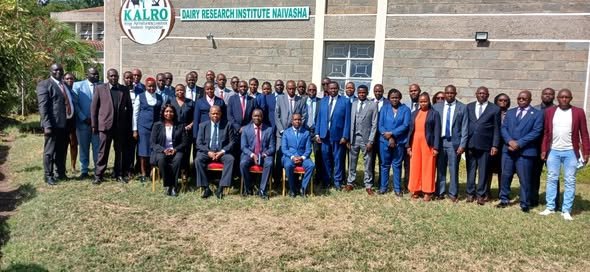
DCI Intensifies Crackdown on Illicit Financial Flows with Nationwide ML/TF Training
By Daily Report KE | Updated October 1, 2026
The Directorate of Criminal Investigations expanded training on money laundering, terrorism financing and related financial crime risks in February 2026 as Kenya continued work to address weaknesses identified by the Financial Action Task Force.
What the Training Covered
The programme followed earlier training-of-trainers and senior-officer sessions and was extended to investigators and officers from several regional commands. Topics included tracing illicit financial flows, using financial intelligence, asset tracing and recovery, and improving coordination between agencies.
Sessions were held in different parts of the country, including Embu and Naivasha, as the DCI sought to build operational capacity beyond headquarters.
Kenya’s FATF Status Explained
Kenya was placed under FATF increased monitoring in February 2024. Increased monitoring does not mean a country is cut off from the international financial system; it means the country has committed to an action plan to address identified strategic deficiencies in its anti-money-laundering and counter-terrorism-financing framework.
In its February 2026 update, FATF said Kenya had made progress in areas including supervision, virtual-asset regulation and terrorism-financing investigations, while further work remained on financial intelligence, money-laundering investigations, targeted financial sanctions and beneficial-ownership transparency.
Why Investigator Training Matters
Laws and regulations alone do not stop illicit financial flows. Investigators must be able to identify suspicious transaction patterns, trace proceeds across accounts and entities, preserve digital and financial evidence, and build cases that can withstand prosecution.
What Kenya Still Had to Address Under FATF Monitoring
FATF’s February 2026 update said Kenya had made progress but still needed to strengthen the effective use of financial intelligence, increase money-laundering investigations and prosecutions, improve targeted financial sanctions and strengthen access to accurate beneficial-ownership information.
Why Regional Training Matters
Financial crime cases often cross county and national borders. Training officers outside Nairobi can help ensure that suspicious transactions, asset trails and digital evidence are recognised earlier rather than being treated only as specialist headquarters matters.
The practical test will be whether training translates into stronger investigations, better inter-agency referrals and cases that can be prosecuted successfully. FATF evaluates effectiveness, not only whether workshops or laws exist.
