
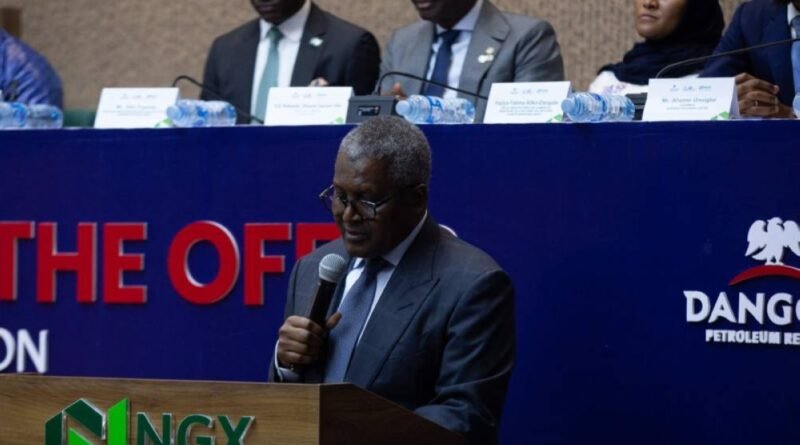
Dangote IPO Opens Route for Kenyan Investors Through NSE-Linked GDRs: What to Know
Kenyan investors have been given a regulated route to participate in the initial public offering of Dangote Petroleum Refinery & Petrochemicals through global depository receipts that are intended to be listed on the Nairobi Securities Exchange, subject to further approvals.
The Capital Markets Authority announced on October 5, 2026 that it had approved a short-form prospectus submitted by Renaissance Capital (Kenya) Limited. The arrangement enables eligible Kenyan investors to participate in the Nigerian refinery company’s IPO without directly buying the underlying shares in Nigeria.
What exactly has CMA approved?
CMA’s approval relates to a Global Depository Receipt, commonly shortened to GDR. A GDR is a negotiable security representing shares in a company based in another country.
Under the arrangement described by CMA, Renaissance Capital Kenya will put custodial arrangements in place for investor funds and work with Renaissance Capital Africa in Nigeria. After the IPO closes and shares are allocated, the Kenyan investment bank plans to structure GDRs representing the relevant shares.
Those GDRs are intended for listing on the Nairobi Securities Exchange, although CMA says the NSE listing remains subject to relevant approvals, including from Nigeria’s Securities and Exchange Commission.
When does the Dangote IPO close?
CMA says the Dangote Petroleum Refinery & Petrochemicals IPO opened on September 14 and is scheduled to close on October 13, 2026.
That deadline matters for investors considering participation, but it should not be interpreted as a reason to rush. An IPO is an investment and carries risk. Investors should read the prospectus, understand the instrument and assess whether it fits their financial circumstances.
Why a GDR instead of buying the shares directly?
Buying shares in a foreign market can involve different settlement systems, currencies, custodians and regulatory requirements. Depository receipts are designed to provide investors in one market with exposure to shares issued in another market through a locally accessible security.
The structure does not remove investment risk. The value of the GDR can still be affected by the performance of the underlying company, market conditions, currency movements, liquidity and other factors described in the prospectus.
This is not the same as the Lamu refinery project
CMA has made an important distinction that investors should understand. The current IPO concerns Dangote Petroleum Refinery & Petrochemicals FZE in Nigeria.
It is not an offer of shares in the proposed Dangote East African Petroleum Refinery and Petrochemicals project in Lamu County, Kenya.
The two projects may share the Dangote name, but they are not the same investment. Investors should therefore avoid assuming that buying the GDR gives them ownership in the Kenyan Lamu project.
Why the transaction matters for Kenya’s capital market
CMA describes the transaction as the first of its kind since Kenya issued policy guidance for global depository receipts and global depository notes.
If completed and listed, it could demonstrate how the NSE can be used to give Kenyan investors access to securities linked to major companies elsewhere in Africa. That could broaden the range of investment products available locally and strengthen Nairobi’s role as a regional financial centre.
Other firms are also facilitating participation
CMA says several licensed firms are facilitating client participation in the IPO through arrangements with authorised transaction parties in Nigeria. The regulator named CPF Capital & Advisory, SBG Securities/Stanbic Bank, Francis Drummond & Co, National Bank of Kenya/Access Bank, Sterling Capital, Kestrel Capital and AXYS Investment Bank.
Investors should independently confirm the regulatory status of any intermediary before sending money. Using an unlicensed person or unofficial online channel creates unnecessary risk.
Five checks before investing
- Read the short-form prospectus and understand the GDR structure.
- Confirm that the investment intermediary is licensed by CMA.
- Understand all fees, currency exposure and settlement arrangements.
- Consider whether you can tolerate a decline in the investment’s value.
- Avoid borrowing money or using emergency savings solely to participate in an IPO.
CMA approval is not an investment recommendation
This is one of the most important points in the regulator’s announcement. CMA explicitly says its approval of the short-form prospectus is not a recommendation to invest.
Regulatory approval means the transaction has gone through the applicable review process; it does not guarantee returns or protect investors from market losses.
The practical takeaway
The Dangote transaction opens a new route for eligible Kenyan investors seeking exposure to a major African IPO. It also introduces an investment instrument that may be unfamiliar to many retail investors.
Anyone considering participation should focus on the prospectus rather than social-media claims about expected profits. Understanding the underlying company, the GDR structure, costs and risks is more important than simply knowing that a well-known business name is involved.
Sources and verification
Daily Report KE independently prepared this explainer from the Capital Markets Authority’s official October 5 announcement. This article is informational and is not personal investment advice.
