
How Kenyans Can Join the British Army (2026 Guide)
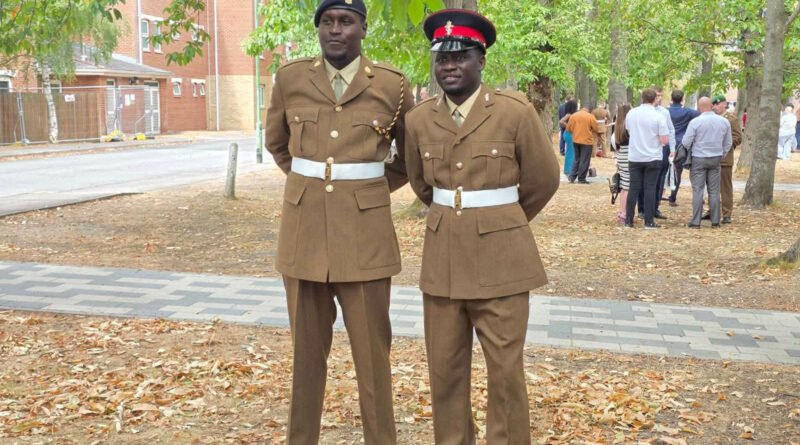
It’s a proud moment for the Kenyan diaspora. Nahashon Kipkosgei Rutto and Titus Kiplagat have officially graduated from British Army training in the United Kingdom, marking another milestone for Kenyans building careers on the world stage.
Completing British Army training is demanding by design. Recruits go through rigorous physical conditioning, discipline training, and character-building exercises meant to test resolve as much as fitness. That two young Kenyan men have come through that process and earned their place in the ranks says a great deal about their determination, courage, and hard work.
Congratulations to Nahashon Kipkosgei Rutto and Titus Kiplagat as they begin this new chapter of service. Kenya is proud of you, and the diaspora is proud of you too. If you know them, drop a congratulatory word in the comments; moments like this deserve to be celebrated widely.
Their story is also a reminder that a growing number of young Kenyans are curious about a similar path. So here’s a practical, up-to-date look at how Kenyans can pursue a career in the British Army.
How Kenyans Can Join the British Army
Kenya is a Commonwealth country, and the British Army has historically recruited soldiers from Commonwealth nations alongside British and Irish citizens. That said, this is one of those processes where the rules shift from year to year, so treat what follows as a general roadmap rather than a guarantee; always confirm details on the official portal before making any plans.
1. Check current eligibility and intake status
This is the step people skip, and it’s the most important one. The British Army periodically pauses new applications from Commonwealth nationals when it receives an unprecedented number of applications relative to the limited number of jobs available, and reopens the intake when the situation allows. That means Commonwealth recruitment isn’t always open on demand; it runs in windows, sometimes with exceptions for specialist roles like Army musicians. Before doing anything else, check the official “Non-UK Nationals” and “Nationality & Commonwealth” pages on the Army’s own site to see whether applications are currently being accepted.
2. Meet the basic eligibility criteria
While exact figures can be updated by the Army from year to year, the general requirements have typically included:
- Being a citizen of Kenya (or another recognised Commonwealth nation) holding a valid, up-to-date passport
- Meeting the Army’s age requirements, generally falling within a range of roughly 18 to 32 for most roles, though this varies by role
- Being in good medical and physical condition, with no disqualifying illnesses
- Having no serious criminal convictions
- Meeting minimum educational and English language standards for the role applied for
3. Apply through the official portal only
All genuine applications go through the Army’s official recruitment site, jobs.army.mod.uk. This cannot be overstated: there are numerous unofficial “recruitment agent” websites and social media pages that claim to process applications or charge fees for placement. The British Army does not charge candidates to apply, and legitimate communication comes only through its own portal and British diplomatic channels. If a page or agent asks for money to “guarantee” a slot, that’s a red flag.
On the official site, candidates typically:
- Create an account with personal details and date of birth
- Answer eligibility questions covering nationality, age, and residency
- Choose the type of role: Regular Soldier, Reserve, Officer, or specialist trades such as chef, medic, or cyber roles
- Complete the full application form, including education and employment history and referee details
- Upload supporting documents, such as a passport copy, birth certificate, and proof of qualifications
4. Prepare for the visa and travel process
For most Commonwealth applicants applying from outside the UK, selection has to be completed in person in Britain. That generally involves applying for a standard visitor visa to cover the selection period, which can extend to the early stages of training. Applicants are expected to show proof of sufficient funds for their stay and confirmation of accommodation, and to have a return ticket booked in case they aren’t selected. The Army itself does not influence how the visa application is decided, since that sits with UK immigration authorities.
5. Go through selection
Selection is the same core process for prospective soldiers and officers, with a few special provisions for units like the Brigade of Gurkhas. It typically includes fitness tests, medical screening, interviews, and assessments of aptitude for different trades. Passing this stage leads into formal training.
6. Understand pay, immigration status, and the citizenship pathway
Recruits accepted into the Army are granted an “exempt immigration control” status for the duration of their service, meaning they don’t need a separate visa while serving. After several years of service, commonly cited as around five years for non-UK soldiers can become eligible to apply for Indefinite Leave to Remain (ILR), which is a step toward permanent residency and, eventually, British citizenship. Soldiers who serve six years or more, or who are discharged due to service-related illness or injury, are typically not required to pay the standard naturalisation fee that other applicants face.
Pay varies by rank, trade, and experience, but starting salaries for recruits are generally competitive by Kenyan standards, and additional allowances often apply depending on posting and specialism.
A quick word of caution
Because interest in this path is so high, scam pages claiming to offer “British Army Commonwealth Recruitment Forms” for a fee are common online. Only trust information and applications coming directly from jobs.army.mod.uk or official British High Commission channels. If you’re unsure about your eligibility, the Army’s own enquiry channels and the British High Commission in Nairobi are the right places to ask.
Stories like that of Nahashon Kipkosgei Rutto and Titus Kiplagat show what’s possible with focus and discipline. Whether or not a military career is the path for you, their graduation is a good reminder that Kenyans continue to compete and succeed on some of the toughest stages in the world.
Congratulations again to both graduates. Leave your message of support in the comments below!
