
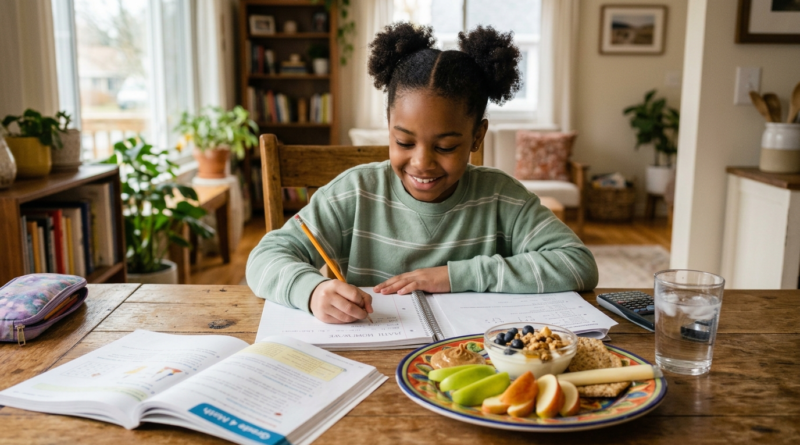
After-School Snack Ideas for Children in Kenya
When children get home from school, some are hungry and others want to eat later. A snack can be a simple way to bridge the time until the next meal, but no particular food guarantees better concentration or homework results. Choose familiar foods, offer a reasonable amount, and let the child’s appetite and dinner time guide whether a snack is needed.
Easy after-school snack ideas using familiar foods
These combinations use foods commonly available in Kenyan homes and shops. Adapt them to what your child likes, what is affordable, and what is available locally.
- Banana and plain yoghurt: slice a banana into a small bowl of unsweetened yoghurt.
- Sweet potato and egg: serve a piece of boiled sweet potato with a boiled egg.
- Fruit and milk: offer seasonal fruit with a glass of milk, if the child tolerates dairy.
- Avocado on bread: mash avocado onto a slice of bread; wholemeal bread is one option where available.
- Githeri: serve a small bowl of leftover maize and beans, reheated safely until steaming hot.
- Vegetables and a dip: offer cucumber or carrot sticks with hummus, mashed beans or another suitable dip.
- Leftovers: a modest serving of beans, rice, chapati or vegetables can work when the next meal is several hours away.
Make the choice fit your afternoon
If dinner is soon, fruit, yoghurt or another small option may be enough—or the child may prefer to wait. If there is a longer gap, a small serving that includes a staple food and a protein-rich food, such as sweet potato with egg or githeri, may be more satisfying. Children’s needs differ by age, activity, appetite and the meals they have already eaten; there is no single portion size that suits everyone.
Kenya’s Ministry of Health healthy-diet guidelines encourage variety and limiting sugary and salty snacks and drinks. Water is a practical drink to offer with food. Keep sweetened drinks and packaged snacks from becoming the everyday default, while making choices that are realistic for your household budget.
Food safety and allergies
- Ask about known allergies before offering foods such as eggs, milk, groundnuts or other nuts. Follow the child’s clinician-provided allergy plan where applicable.
- For children under five, avoid whole nuts because of choking risk; use an age-appropriate alternative. Prepare foods in pieces and textures the child can manage safely.
- Refrigerate leftovers promptly and reheat them thoroughly. Do not leave cooked food at room temperature for long periods.
- For children with a medical condition, feeding difficulty or growth concern, ask a qualified health professional for advice tailored to the child.
A simple routine, without pressure
Ask whether your child is hungry, offer one or two suitable choices, and keep the atmosphere relaxed. A snack is optional: it should complement the family’s normal meals rather than become a test of whether a child will focus or behave a certain way.
Sources and further reading
- Kenya Ministry of Health, National Guidelines for Healthy Diets and Physical Activity — guidance for school-age children includes food variety, water and limiting sugary and salty snacks.
- NHS: Healthier snacks for children — practical snack ideas and safety notes, including avoiding whole nuts for children under five.
This article offers general food ideas, not individual medical or nutrition advice. A snack cannot diagnose, prevent or treat a concentration, learning or health condition.