
Kenya Focused on Safety of 500,000 Citizens in the Middle East, Says Musalia Mudavadi
The Kenyan government has reaffirmed its commitment to protecting the safety and welfare of more than 500,000 Kenyans living, working, and studying in the Middle East, amid rising geopolitical tensions in the region.
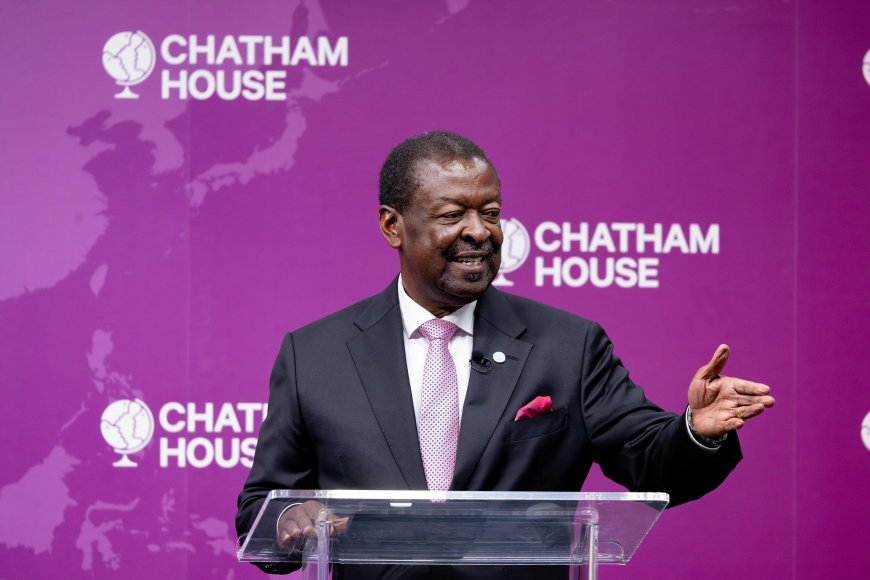
Speaking during a lecture at Chatham House in London, Musalia Mudavadi, who serves as Kenya’s Prime Cabinet Secretary and Cabinet Secretary for Foreign and Diaspora Affairs, said the government remains focused on safeguarding its citizens abroad while advocating for peace and stability.
Mudavadi stated that Kenya continues to maintain a neutral and principled diplomatic position, promoting peace, restraint, humanitarian protection, and respect for international law amid the ongoing conflicts affecting the Middle East.
Concerns Over Global Energy and Trade Disruptions
Mudavadi warned that prolonged violence and instability in the Middle East could have far-reaching economic and security consequences globally, particularly if shipping through the Strait of Hormuz remains disrupted.
The strait handles about 20 percent of the world’s oil supply, making it one of the most important global energy routes.
“The longer the violence and insecurity persist, the greater the harm. Disruptions to energy supply and air travel could have serious economic and security ramifications,” Mudavadi said.
He noted that Africa is already grappling with multiple challenges, including terrorism and economic shocks caused by previous global crises such as the COVID-19 and the Russia–Ukraine War.
Call for Africa to Diversify Supply Chains
Mudavadi emphasized that the conflict highlights the urgent need for African countries to diversify supply chains and accelerate regional integration under the African Continental Free Trade Area.
He also urged African nations to invest more in renewable energy to reduce dependence on imported fossil fuels.
“If Africa were powered by clean energy sources such as solar, geothermal, and hydro, crises in the Middle East would not carry the same distressing impact,” he said.
Appeal to Oil Producers
The Prime Cabinet Secretary also appealed to the Organization of the Petroleum Exporting Countries to play a role in de-escalating tensions and consider the economic implications for African countries that depend heavily on imported fuel.
He warned that the combined impact of instability in the Red Sea and the potential closure of the Strait of Hormuz could signal a looming global economic crisis.
Global Attention Shifting Away from Africa
Mudavadi further cautioned that escalating tensions in the Middle East risk diverting international attention from humanitarian crises in Africa, including the ongoing conflict in Sudan.
He noted that similar situations occurred during earlier global conflicts, when attention shifted to wars in Gaza and Ukraine.
A Changing Global Order
Mudavadi observed that international relations are currently undergoing a historic transformation, marked by shifting alliances and increasing geopolitical competition.
According to him, the evolving global order is increasingly characterized by interest-driven alliances, protectionism, and militarism, which threaten multilateral cooperation and global supply chains.
“These global trends risk undermining peace, security, and the economic progress Africa has worked hard to achieve,” he said.
He also expressed concern over rising political instability across parts of the continent, including an increase in unconstitutional changes of government.
Africa’s Strategic Choice
Mudavadi concluded by urging African nations to transform their immense potential into strategic influence on the global stage.
He highlighted Africa’s strengths in technology, digital innovation, natural resources, critical minerals, and its youthful population, saying these assets must be harnessed to drive economic growth and strengthen the continent’s global voice.
“In this moment of global turbulence, African states face a strategic choice: either transform their potential into influence or remain at the geopolitical periphery as passive actors,” Mudavadi said.
What Kenyans in the region should do
Kenyans living or travelling in countries affected by heightened tensions should keep their contact details updated with the nearest Kenyan mission, follow official security advisories and retain valid travel documents. Emergency arrangements can differ by country and situation.
