
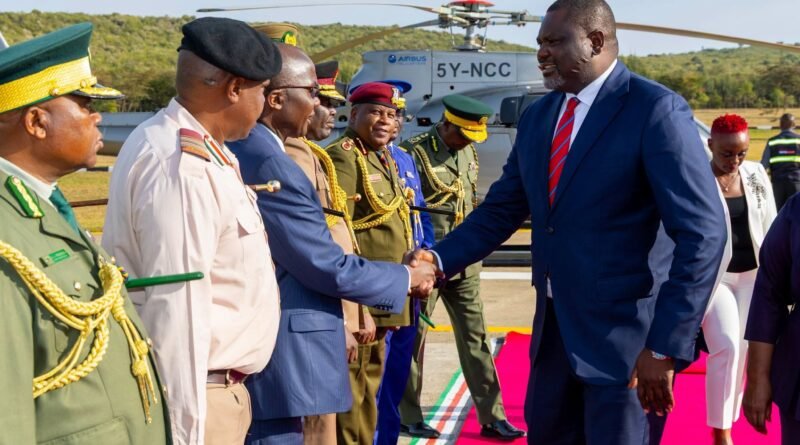
NYS Passes Out 15,361 Servicemen and Women at Gilgil Academy
Thousands of young Kenyans marked a major transition in their National Youth Service journey on October 2, 2026, as the 2026 passing-out parade was held at the NYS Paramilitary Academy in Gilgil, Nakuru County.
Cabinet Secretary for Public Service and Human Capital Development Geoffrey Ruku said in a public update that he had arrived at the academy to preside over the passing-out of 15,361 servicemen and servicewomen. The ceremony marks the completion of the basic paramilitary phase and the beginning of the next stage of national service for the graduating cohort.
The National Youth Service is one of Kenya’s largest structured youth training programmes. Its model combines paramilitary discipline, national service, practical work experience and technical or vocational education, with the aim of preparing young people for employment, entrepreneurship and public service.
What the NYS passing-out ceremony means
A passing-out parade is the formal ceremony that marks successful completion of a recruit’s initial paramilitary training. According to the National Youth Service, volunteer recruits undergo six months of basic paramilitary training at the NYS Paramilitary Academy in Gilgil and at NYSTTI Naivasha.
The programme is designed to build discipline, resilience, patriotism, teamwork and a sense of public duty. Training also prepares recruits for the highly structured environment they enter during the National Service phase.
For the 2026 graduating cohort, the parade is therefore not the end of the NYS journey. It is the point at which recruits become servicemen and servicewomen and move into national deployment.
What happens after paramilitary training?
The NYS describes National Service as the second phase of the programme. Servicemen and servicewomen who complete paramilitary training can be deployed to NYS camps and government projects across the country.
During this phase, they may take part in programmes involving:
- road and building construction;
- agricultural production and agribusiness;
- environmental conservation and tree growing;
- disaster response and community support;
- security services at selected government installations;
- manual and semi-skilled public works;
- youth mentorship and outreach programmes; and
- other assignments of national importance.
The National Service phase is intended to give young people practical experience while contributing directly to public projects and national development.
NYS then moves graduates into technical and vocational training
After completing National Service, eligible servicemen and servicewomen can proceed to Technical and Vocational Education and Training within NYS institutions.
The Service offers training at artisan, craft certificate, technician and diploma levels. Courses cover a wide range of practical areas that can support employment or self-employment, including construction, engineering, automotive trades, agriculture, hospitality and other technical fields.
The NYS says its training model is meant to produce young people who are not only disciplined but also equipped with practical, market-oriented skills.
How young people join NYS
NYS recruitment is conducted nationally through advertised recruitment exercises. In its 2026 volunteer recruitment notice, the Service required applicants to be Kenyan citizens and residents of the sub-counties where they applied.
The 2026 volunteer recruitment requirements included:
- being aged between 18 and 24 years;
- having at least a KCSE mean grade of D (Plain);
- presenting an original national identity card and academic certificates;
- having a valid police clearance certificate;
- being willing to undergo medical examination;
- being prepared for basic paramilitary training; and
- being willing to serve in any part of Kenya.
Successful applicants are later issued official calling letters indicating when and where they should report for training.
NYS warns applicants against recruitment scams
The Service has repeatedly warned young people against paying money to individuals claiming they can secure NYS recruitment slots.
In July 2026, NYS warned prospective recruits about fake calling letters circulating online. The fraudulent documents reportedly promised salaries and allowances and instructed candidates to report for training.
Applicants should therefore verify recruitment information through official NYS communication channels and avoid sending money to individuals who claim they can influence recruitment.
How large is the National Youth Service?
Official government data shows that the NYS has expanded significantly in recent years. The 2026 Economic Survey published by the Kenya National Bureau of Statistics reported that 19,496 young people were recruited into the Service in 2025, up from 15,500 in 2024.
The survey also reported 18,378 servicemen and servicewomen in paramilitary training in 2025. It further showed tens of thousands participating in National Service and TVET programmes.
These numbers underline the scale of the programme and why NYS policy has a significant effect on youth training, employment preparation and national development.
The government’s longer-term expansion plan
NYS says its Strategic Plan for the 2023/2024–2027/2028 period aims to progressively increase annual youth intake, with a long-term target of reaching up to 100,000 recruits a year by the 2027/2028 financial year.
That expansion would require additional training infrastructure, instructors, accommodation, equipment, technical institutions and funding if the quality of training is to be maintained as enrolment grows.
The NYS currently operates multiple camps and technical institutions across the country, with the Gilgil Paramilitary Academy remaining one of its key training centres.
NYS has existed since 1964
The National Youth Service was established on September 1, 1964, shortly after Kenya attained independence. Its original purpose was to train young citizens for national service and deploy them to projects considered important to the country’s development.
Over the decades, the institution has undergone several administrative and legal changes. A major reform came with the National Youth Service Act, 2018, which established NYS as a uniformed and disciplined service and created a clearer governance structure.
The Act also established the National Youth Service Council to provide policy direction and oversight, while the Commandant General serves as the institution’s chief executive and accounting officer.
What NYS is legally mandated to do
Under the National Youth Service Act, the institution’s functions include paramilitary training, vocational education, leadership development, commercial and production activities, and programmes intended to build patriotism, integrity and national service among young people.
The Service also works with other government agencies and partners on projects that require disciplined labour, technical skills or youth mobilisation.
Why the 2026 passing-out matters
The graduation of 15,361 servicemen and servicewomen represents one of the largest single groups of young people moving from training into structured national service in 2026.
For the graduates, the ceremony is both a milestone and the start of a new phase that can eventually lead to vocational qualifications, employment opportunities or entrepreneurship.
For the government, the size of the cohort also highlights the challenge of ensuring that large-scale recruitment is matched by meaningful deployments, quality vocational training and pathways into productive work after service.
Opportunities for NYS graduates
NYS training does not automatically guarantee a government job. However, graduates can use their technical qualifications, national-service experience and practical skills when seeking employment in the private sector, public institutions or self-employment.
Some government agencies and disciplined services also periodically advertise opportunities that specifically recognise NYS training. In 2026, the Service itself advertised positions for former NYS servicemen and servicewomen in areas such as driving, plant operation, masonry, electrical work, carpentry, plumbing, agriculture, mechanical work and general duty.
Graduates should always confirm vacancies through official government platforms and avoid individuals promising jobs in exchange for payment.
Gilgil remains central to NYS training
The Gilgil Paramilitary Academy in Nakuru County has long been associated with the initial training and regimentation of NYS recruits. The academy hosts major ceremonies including passing-out parades and remains an important institution in the Service’s training structure.
The 2026 ceremony therefore continues a long tradition in which new servicemen and servicewomen formally complete their initial training before deployment to other parts of the country.
What parents and graduates should know
Families attending or following a passing-out ceremony should understand that graduates may be posted away from their home counties during National Service. Deployment depends on NYS operational needs and the programmes available at different camps.
Graduates should keep their official documentation safely because certificates and discharge records may later be required when applying for vocational training, employment or recruitment into other institutions.
Official sources
- National Youth Service: Background and programme structure
- NYS: Mandate and functions
- NYS: Strategic pillars and phases of training
- Government Advertising Agency: NYS 2026 volunteer recruitment
- Kenya National Bureau of Statistics: Economic Survey 2026
Daily Report KE will update this article if NYS or the Ministry of Public Service publishes additional information from the 2026 passing-out ceremony.
