
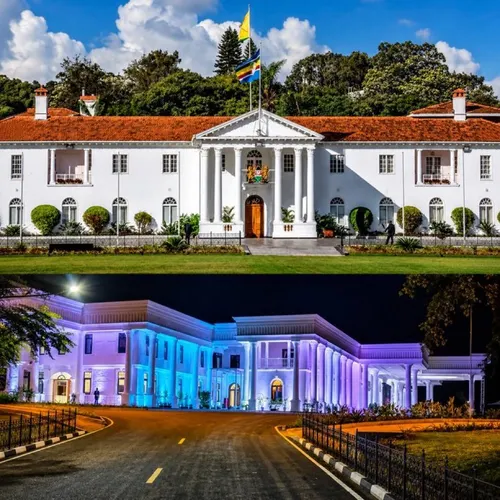
State House Nairobi Renovation Sparks Social Media Debate Over Modern Makeover
By Faith Chepkirui
Updated 4:30 PM ET,Thur May 14, 2026
Nairobi, Kenya Before-and-after photographs of State House Nairobi have ignited a fierce debate across social media platforms, as Kenyans grapple with the transformation of one of the nation’s most iconic colonial-era buildings.
President William Ruto’s decision to replace the residence’s distinctive red-tiled roof with a flat, modern design has drawn both praise and sharp criticism since renovations began. But new nighttime images showing the property illuminated with LED-style lighting have reignited the controversy.
The Architectural Association of Kenya (AAK) had previously condemned the renovation, arguing in 2025 that the changes compromised what they described as a “neoclassical masterpiece” deserving preservation rather than modernization.
According to Treasury supplementary estimates released in 2024, KSh 26 million (approximately $200,000 USD) was allocated for the refurbishment. Additionally, budget documents from 2023 revealed State House had requested KSh 700 million (approximately $5.4 million USD) for construction of a modern dais.
The visual transformation is stark. The original structure featured traditional colonial roofing with reddish tiles; the renovated version presents a plain white flat roof. Recent nighttime photographs show the building bathed in bright lighting that some critics say resembles commercial entertainment venues rather than a presidential residence.
This is not the first time renovations at State House have generated public discussion. In 2023, the familiar asphalt tarmac surrounding the residence was replaced with grey cabro blocks, drawing mixed reactions over durability and appearance. By January 2024, the property was sealed off for nearly two months during another phase of construction, forcing the president to relocate operations to state lodges in Nakuru, Eldoret, Nyeri, Kakamega, and Kisumu.
Officials at the time stated the renovations were driven partly by austerity measures, noting that recurring costs for hiring tents for lawn functions had made permanent structural solutions more practical.
State House Nairobi has served as the official residence of Kenya’s presidents since independence in 1963. The building’s colonial architectural heritage has long made it a symbol of both the nation’s history and its post-independence governance.
The debate reflects broader tensions in Kenya between preserving colonial-era landmarks and embracing modern infrastructure a conversation that continues to unfold online as new images circulate.
Faith Chepkirui has reached out to State House for comment and is awaiting a response.