
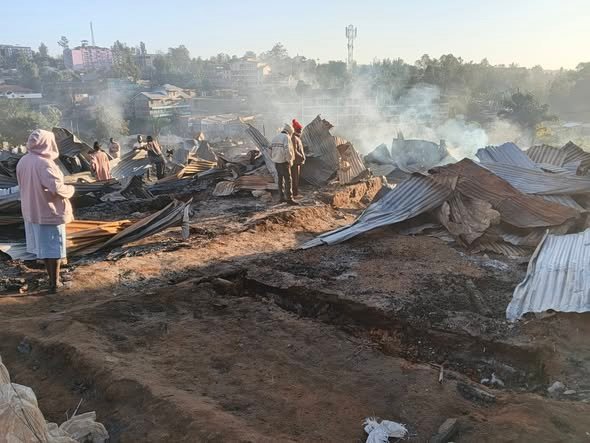
Devastating Fire Destroys Hundreds of Businesses in Shauri, Embu
By Kelvin Kibet | Updated October 1, 2026
A major fire swept through the Shauri area of Embu town on the night of February 2, destroying furniture workshops, timber yards, machinery and finished goods and leaving hundreds of traders counting losses.
How extensive was the damage?
Kenya News Agency reported that about 300 traders were affected. Some business owners said they lost equipment, raw materials and furniture prepared for delivery, while one trader estimated his own losses at about KSh2.6 million.
What traders said about the emergency response
Several traders criticised the firefighting response, saying water and equipment were insufficient. Embu County’s emergency-response director later said crews had also faced interference from a hostile crowd, including damage to firefighting equipment.
The cause was not immediately established
Authorities had not announced a final cause of the blaze in the initial reports. That distinction matters because early claims after major fires can quickly become speculation before investigators establish what happened.
Government later provided support
Later in February, a government delegation led by Public Service Cabinet Secretary Geoffrey Ruku visited the affected traders and distributed financial and material assistance intended to help them rebuild.
Why the incident matters beyond one market
Repeated fires in dense commercial areas raise questions about access routes, hydrants, emergency equipment, insurance and whether traders have practical recovery plans. Fire prevention and response capacity can directly affect small-business survival after a disaster.
What affected traders may need after a fire
For small businesses, recovery can involve replacing tools and stock, documenting losses for lenders or insurers, renegotiating supplier obligations and finding temporary premises. Local authorities can also reduce future risk by reviewing access for fire engines, water availability and enforcement of fire-safety standards in dense commercial areas.
Because many traders in Shauri depend directly on workshops and showrooms for daily income, the economic impact extends beyond destroyed property to employees, suppliers and customers waiting for orders.
